
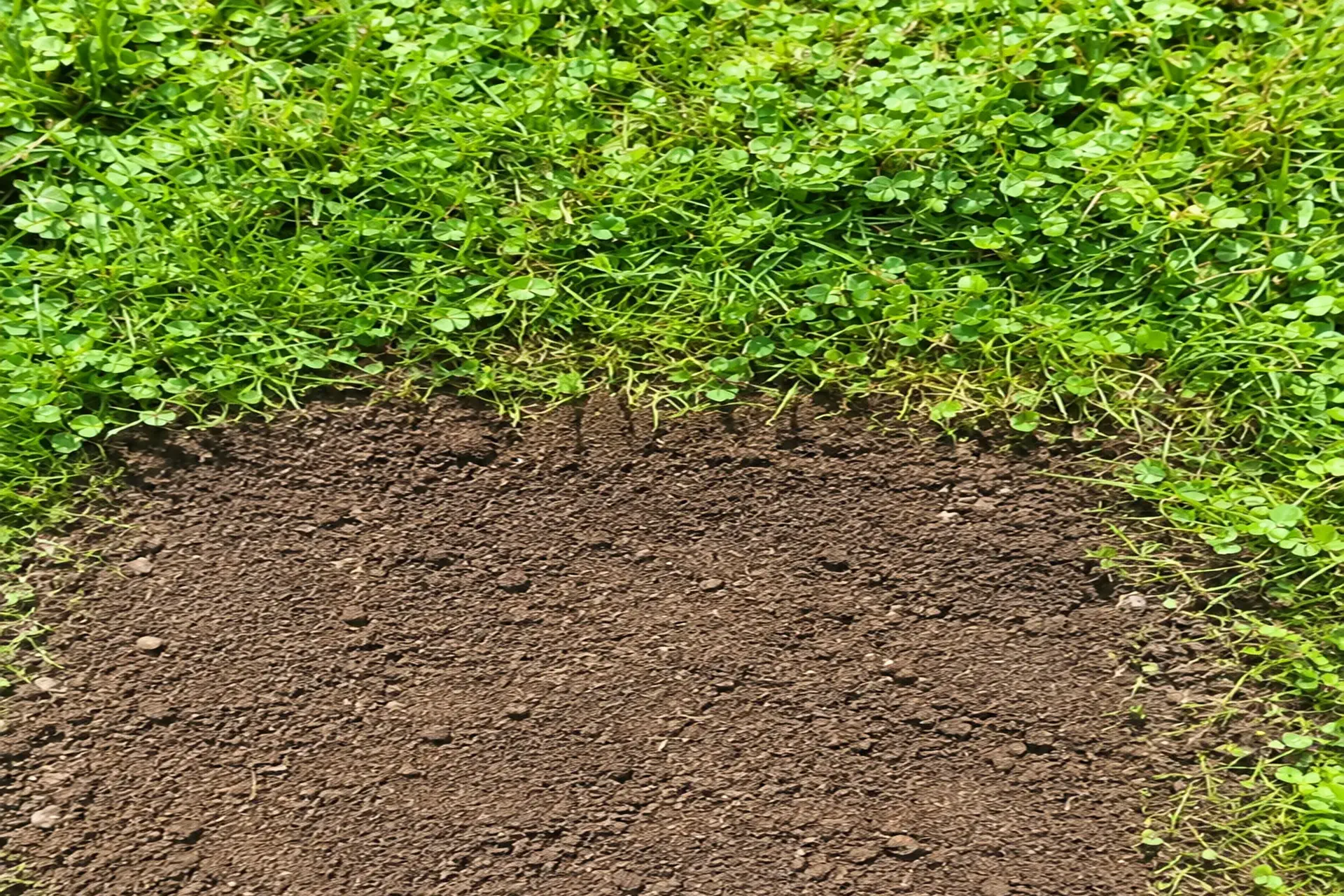
A sinkhole had developed in the yard of a Brooklyn, NY property. The affected area was approximately 3 feet by 2 feet and had created a noticeable depression in the ground.
After inspecting the area, our senior estimator determined that the sinkhole was very likely connected to an old cesspool located close to the affected area. The previous backfill around the old cesspool may not have been properly compacted, leaving the soil vulnerable to settlement.
Our team from Zavza Seal was brought in to excavate the area, investigate the sinkhole, rebuild the soil base, and compact the backfill to help prevent future settlement.
The Problem: A Sinkhole in the Yard
The property had a sinkhole measuring approximately 3 feet by 2 feet.
A sinkhole or sudden depression in a yard should not be treated as a simple landscaping problem. A void or weak area below the surface can cause the ground above it to settle further.
During our inspection, our senior estimator found that the sinkhole was located near an old cesspool. Based on the site conditions, the old cesspool was considered the likely cause of the settlement.
The concern was not only the visible hole. If the material beneath the surface was loose or had not been properly compacted, simply filling the hole at the surface could allow the ground to settle again.
Proper backfilling and compaction were therefore important parts of the repair.
The Solution: Excavation and Sinkhole Repair
Our team first excavated around the sinkhole to expose the affected area. This allowed us to investigate the condition below the surface and determine what needed to be removed or cleared before rebuilding the area.
We then cleared the edges of the sinkhole so the new fill could be placed on a more stable surface.
The repair required approximately 2 cubic yards of recycled concrete aggregate, or RCA, along with approximately 1/2 yard of soil.
Building a Stable Base
The RCA was placed first to create a compact base within the affected area.
Using a suitable base material is important when repairing an area where settlement has occurred. The material needs to be placed in a way that reduces the chance of leaving large voids beneath the finished surface.
After the RCA was placed, soil was added above it until the area was brought back to the level of the surrounding yard.
Thorough Compaction
Compaction was one of the most important parts of this sinkhole repair.
Instead of filling the entire area at once, our team backfilled the area in stages. Each layer was compacted before the next layer was added.
The soil and RCA were compacted every 1 vertical foot using a commercial-grade vibratory plate compactor.
This process helped create a denser and more stable fill. Proper compaction is especially important when repairing ground that has previously settled because loose fill can settle again under its own weight.
NYC specifications for backfill work also recognize the importance of using suitable fill material and placing material under conditions that allow the required density to be achieved.
Restoring the Yard Surface
Once the RCA and soil had been placed and compacted, the area was leveled with the surrounding yard.
The goal was to restore the surface while creating a more stable base below it.
Because the sinkhole was believed to be associated with an old cesspool, proper handling of the underlying condition was an important part of the repair. New York State guidance for abandoned wastewater system components notes that cesspools and similar components should be properly decommissioned to reduce health and safety hazards, with local requirements checked before work is performed.
The Result:
Zavza Seal repaired the approximately 3-foot by 2-foot sinkhole by excavating the affected area, clearing the edges, installing RCA and soil, and compacting the fill in controlled stages.
The repaired area was brought back to the level of the surrounding yard.
The main focus of the project was not simply to fill the visible depression. It was to rebuild the area with properly placed and thoroughly compacted material to provide a more stable surface.