
The Problem:
Our team worked on a home in Setauket, NY, where the basement had a structural crack in the foundation wall with active water intrusion.
The area around the crack had also developed mold because of the ongoing moisture. Before repairing the foundation crack, the affected area needed to be properly remediated so the repair could be completed in a clean and controlled environment.
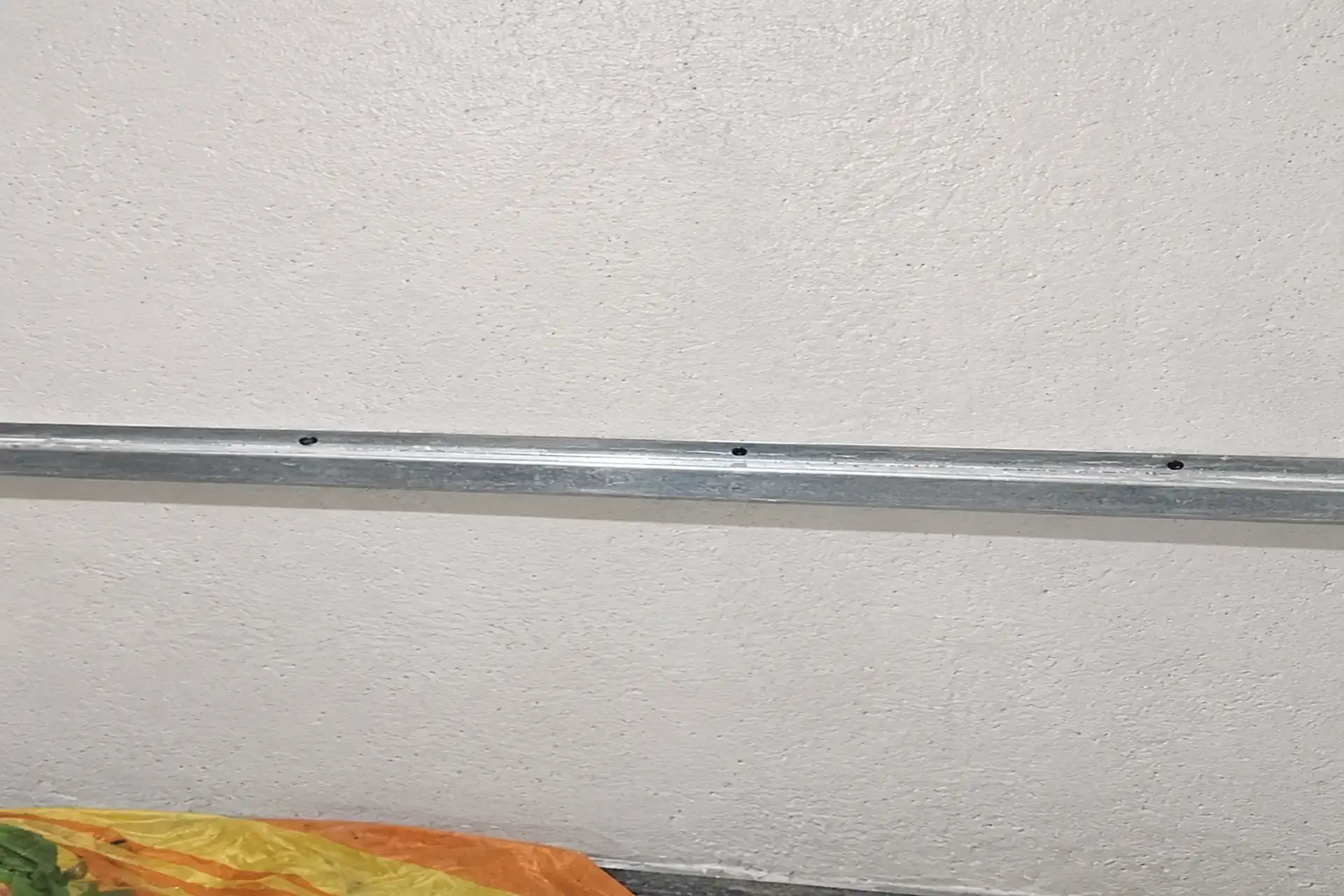
The crack was located in a tight area of the basement. Depending on access, some horizontal metal framing could also need to be cut to reach the affected section.
Mold Remediation:
Our first step was to prepare the area and contain the affected space.
The work area was isolated with 6-mil plastic sheeting to help prevent dust and airborne contaminants from spreading to other parts of the home. Our crew used disposable protective suits, gloves and eye protection.
A 3-stage negative air scrubber with 550 CFM capacity and H13 HEPA filtration was operated in the basement near the crawlspace during the remediation process.
The affected concrete surface was treated with Shockwave Mold Cleaner. Because mold had penetrated into the concrete, the contaminated section was deeply ground using diamond blades to remove the affected material.
After the concrete was prepared, a water-based fungicidal protective coating was applied to the surface. This helped protect the treated area against future fungal and mold growth.
Structural Foundation Crack Repair:
Once the affected area was properly prepared, our team repaired the foundation crack.
The crack was first chased and scarified to remove loose material and expose sound concrete.
Diamond bits were then used to create access ports along the crack. These ports allowed our crew to inject a combination of epoxy and urethane.
The epoxy helped reinforce the affected area, while the urethane helped seal the crack against water intrusion.
After the injection work was completed, the repaired area was reinforced with 4.5-ounce fiberglass mesh. The mesh was sandwiched between two coats of 6,000 PSI waterproofing cement to provide additional reinforcement and waterproofing.
The Result:
The Setauket project addressed both the active water intrusion and mold around the structural foundation crack.
The work included mold containment and removal, deep cleaning of the affected concrete, protective coating, structural crack injection and reinforced waterproofing.
By treating the contaminated area and then repairing the foundation crack, our team addressed the moisture problem while strengthening and sealing the affected section of the foundation.
The work area was left dry, clean and free of visible contamination and construction debris.