
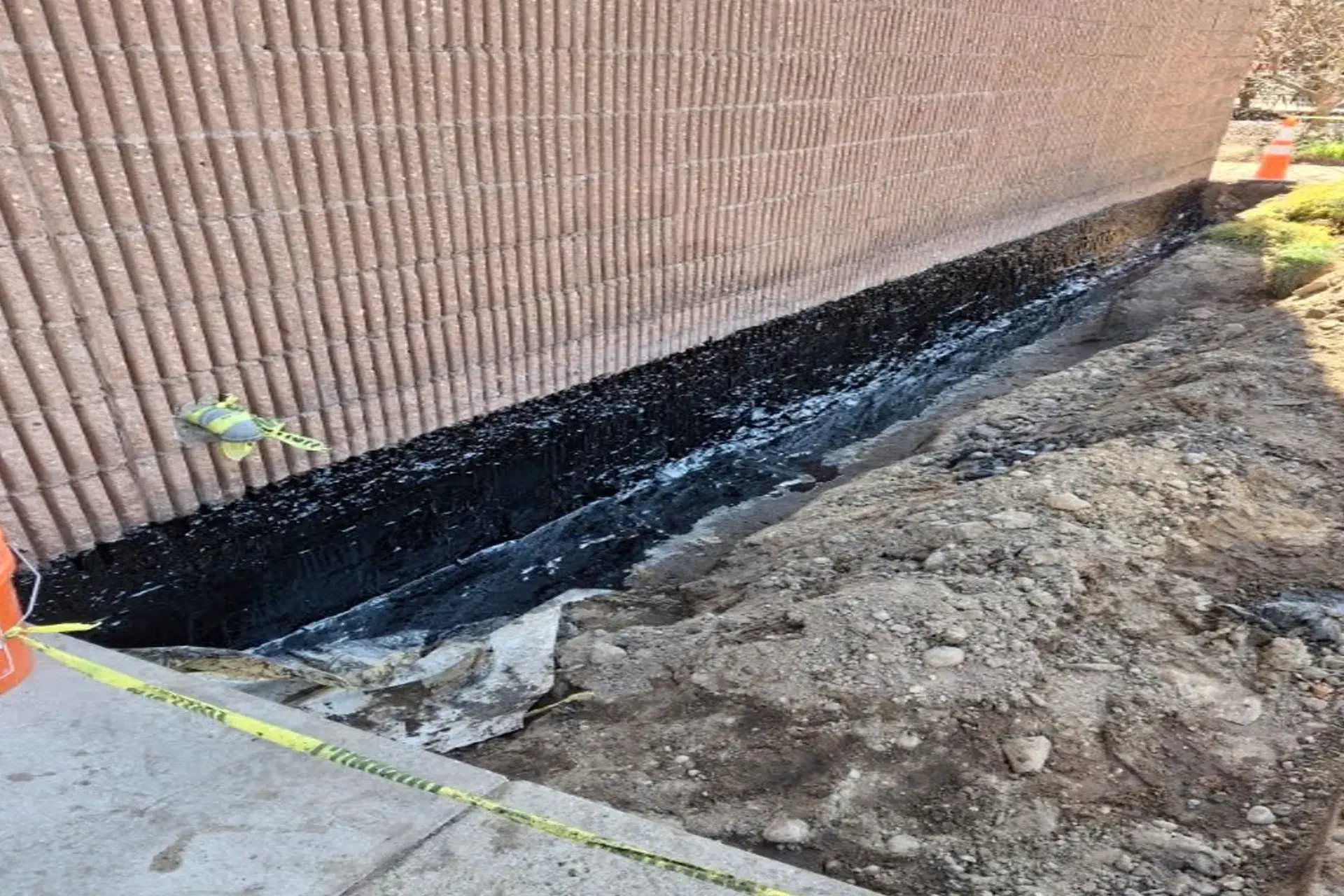
The Problem:
The tunnel had several serious issues that needed to be fixed:
There was a high amount of water and soil pressure pushing against the concrete. This pressure had already caused many hairline cracks, some of which were very small and hard to see. These cracks kept coming back, even after multiple repairs.
There were also many nail penetrations in the concrete from earlier framing work. These small penetrations created weak points. Over time, small movements from the structure caused vibrations in these nails, which led to more cracking.
In addition, some parts of the concrete were not poured properly during construction. This created weak and uneven areas in the tunnel surface that were more likely to crack and fail.
All of these issues made the tunnel vulnerable to water intrusion and long-term damage. A strong and complete solution was needed to protect the structure.
Our Solution:
We created a full surface waterproofing and protection system designed to stop cracks and prevent future damage.
Step 1: Surface Preparation
We wire brushed and ground the concrete surface to remove loose material and prepare it for proper bonding.
Step 2: Custom Concrete Membrane
Under the supervision of our senior project manager, we created a specialized concrete membrane using a mix of cement, silicate materials, sand, lime, and polymers. This mixture was designed to be both strong and flexible.
Step 3: Deep Penetration Treatment
We used deionized water with silicate to help the membrane penetrate deep into the concrete. This allowed the material to bond at a molecular level and strengthen the structure from within.
Step 4: Focus on Penetration Points
We gave extra attention to all nail penetrations and weak spots. These areas were sealed carefully to prevent future cracking.
Step 5: Full Tunnel Application
We applied a thick and continuous layer of the membrane across the entire tunnel surface. This created a unified protective barrier that resists water pressure and movement.
The Result:
The tunnel is now fully protected and reinforced.
- Hairline cracks have been sealed and prevented from returning
- Water pressure is now controlled with a strong protective barrier
- Weak and poorly poured areas have been reinforced
- Penetration points are sealed and stable
- The structure is now ready for long-term use without ongoing repairs
Why Waterproofing Concrete Structures Is Important?
Concrete may look solid, but it can absorb water over time. When water enters, it can cause cracks, weakening, and long-term damage. Proper waterproofing helps:
- Prevent cracks from forming
- Protect against water intrusion
- Increase the life of the structure
- Reduce future repair costs
This project in South Setauket shows how proper waterproofing and surface protection can solve serious structural problems. By using the right materials and applying them correctly, we were able to stop ongoing damage and provide a long-lasting solution for the tunnel.