
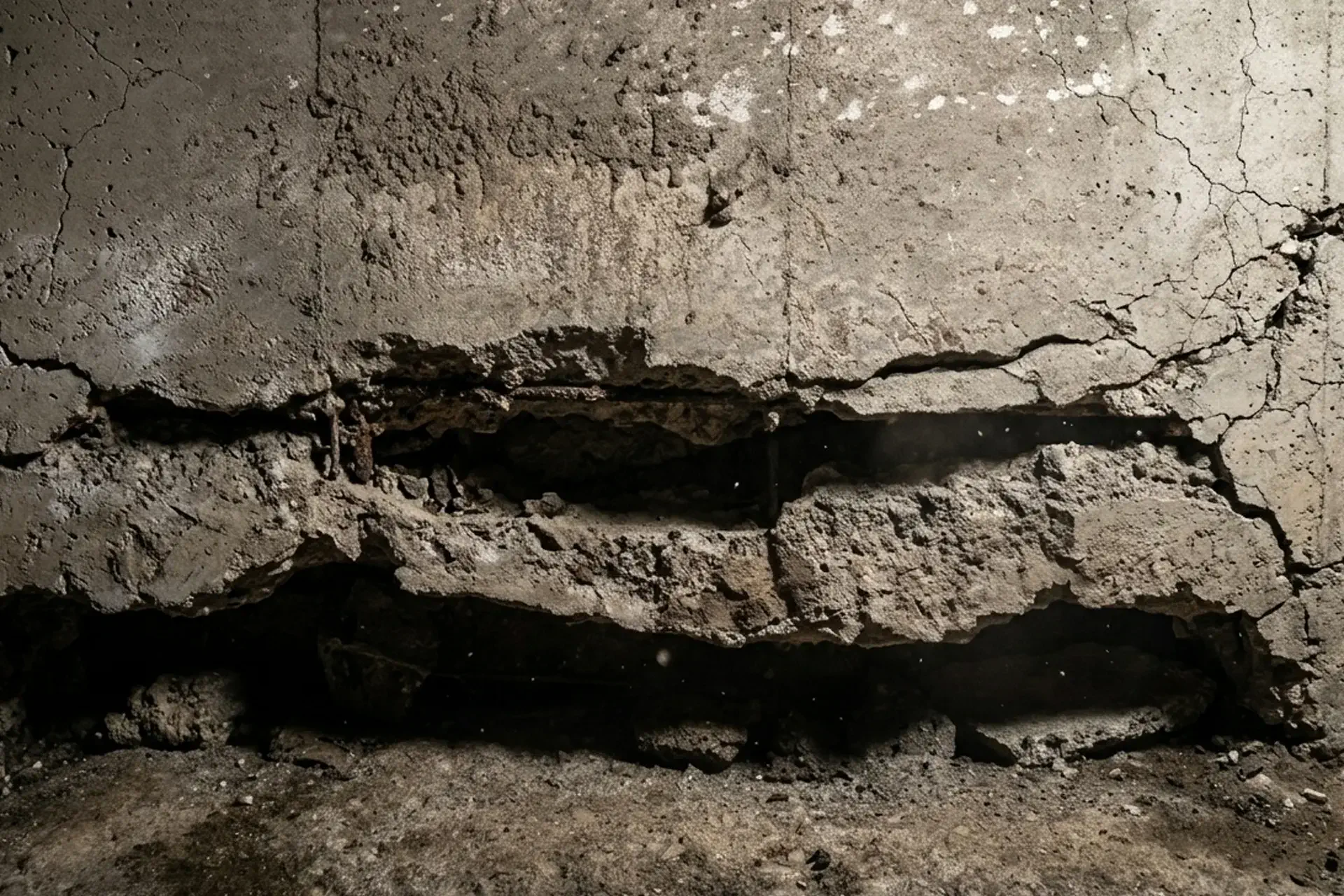
A crack in a foundation does not always mean the foundation is failing.
For an insurance adjuster, however, a reported foundation crack can raise several questions. Is it a new condition or something that has been there for years? Is it simply a cosmetic crack, or does it point to settlement or movement? Did a recent storm cause the crack, or did water simply enter through an existing crack?
These questions are especially important when inspecting properties after heavy rain, flooding, plumbing failures or other water-related losses.
The appearance of the crack is only one part of the picture. Its location, direction, size, surrounding conditions and signs of movement all need to be considered. The history of the property can also provide important context.
For adjusters working across Long Island, Brooklyn, Queens and the Bronx, understanding these differences can make foundation damage assessments more accurate and help identify when additional evaluation may be appropriate.
What Is a Cosmetic Foundation Crack?
Cosmetic cracks are generally minor cracks that do not appear to be associated with significant structural movement.
Concrete naturally changes as it cures, dries and ages. Small cracks can develop as a result of normal shrinkage or minor movement over time. Older foundations may also have cracks that have remained unchanged for many years without affecting the stability of the building.
A thin, isolated vertical crack in a poured-concrete basement wall, for example, may not be a major structural concern if the wall remains straight, there is no visible displacement and there are no other signs of movement.
That does not mean every small crack is cosmetic. Size alone is not enough to make that determination.
A narrow crack accompanied by wall movement, settlement or other damage deserves closer attention than an isolated crack in an otherwise stable wall.
What Is a Structural Foundation Crack?
A structural crack is generally associated with movement or another condition that may affect the performance of the foundation or a load-bearing part of the building.
Foundation movement can have several causes. Soil settlement, differential settlement, hydrostatic pressure, lateral soil pressure, drainage problems and changes in soil moisture can all contribute to foundation movement. In some cases, erosion or other changes in the soil around a property can also play a role.
The important thing for an adjuster is that the crack itself does not always tell the whole story.
A wider crack may deserve attention, but a smaller crack can also be significant when it is accompanied by displacement or other evidence of movement.
Instead of asking only, “How big is the crack?” it is often more useful to ask, “What else is happening around the crack?”
Structural vs. Cosmetic Cracks: What Is the Difference?
There is no single rule that can classify every foundation crack. The overall condition of the foundation matters.
A cosmetic crack is more likely to be isolated and stable, with no obvious movement around it. A structural concern becomes more likely when there is evidence that the foundation or surrounding building components have moved.
For example, an isolated, very narrow crack with no displacement may be less concerning than a crack that is widening, accompanied by a bowing wall or connected to other cracks.
The condition of nearby doors, windows and floors can also provide useful clues. If a basement door has become difficult to close, a window has shifted or a floor is noticeably uneven in the same general area as the foundation crack, those conditions should be documented.
The same applies to water. Water staining or active water intrusion does not automatically mean the crack is structural, but it can provide important information about what is happening at the foundation.
Why the Direction of a Crack Matters
The direction and pattern of a foundation crack can provide useful clues, although neither should be used by itself to determine the cause.
Vertical Foundation Cracks
Vertical cracks are common in poured-concrete foundations. Some develop as concrete shrinks during curing, while others can be associated with settlement or movement.
When an adjuster sees a vertical crack, it is useful to look beyond the crack itself. Has its width changed? Is there water entering through it? Are there other cracks nearby? Does the wall appear straight and stable?
A vertical crack without other signs of movement may be relatively minor. A similar crack accompanied by displacement or settlement indicators deserves more attention.
Horizontal Foundation Cracks
Horizontal cracks in basement walls generally deserve a closer look because they can be associated with pressure against the foundation wall.
When soil becomes saturated, the pressure against a basement wall can increase. Drainage problems can make those conditions worse. In some cases, horizontal cracking can occur along with bowing or leaning of the wall.
This does not mean every horizontal crack represents a foundation failure. The condition of the wall is important. A crack in a straight, stable wall is different from a crack accompanied by visible bowing or displacement.
Diagonal and Stair-Step Cracks
Diagonal cracks can appear around windows, doors and corners and may be associated with differential movement or settlement. The surrounding area should be inspected for additional evidence before drawing conclusions about the cause.
Stair-step cracks are commonly seen in brick and masonry foundations. When these cracks extend through several masonry joints, they may indicate movement or settlement and should be documented carefully.
Again, the pattern is a reason to investigate, not proof by itself that a foundation has failed.
What Signs Suggest a Crack May Be More Than Cosmetic?
One of the easiest mistakes during a foundation inspection is focusing so closely on the crack that the rest of the room gets overlooked.
The surrounding building can provide important information.
Look at the foundation wall as a whole. Does it remain straight, or does it appear to bow or lean? Are there gaps where the wall meets the floor? Are there other cracks nearby? Has the homeowner noticed that doors or windows no longer operate normally?
Floor conditions can also be useful. A noticeably uneven floor, separation between materials or other signs of movement may provide additional context.
Water conditions should be documented as well. Staining, efflorescence, damp areas or active water entry can help establish that moisture is present, although they do not automatically establish what caused the crack.
The goal is to understand the complete condition rather than assigning a conclusion based on one visible feature.
Did Water Cause the Crack, or Did the Crack Let Water In?
This is an important question when assessing water-related claims.
After a major storm, an adjuster may find water entering through a foundation crack. It can be tempting to assume that the storm caused the crack.
But that may not be the case.
A crack could have existed before the storm and simply become a pathway for water once the surrounding soil became saturated. Heavy rainfall can increase hydrostatic pressure against foundation walls, while poor drainage can allow water to remain against the foundation.
In other situations, changes in soil conditions or pressure may contribute to foundation movement.
That is why the presence of water at a crack does not, by itself, establish when the crack formed or what caused it.
The crack and the water intrusion should be documented as separate conditions, and the available evidence should be considered together.
What Should an Adjuster Document?
Good documentation is especially important when the age or cause of a foundation condition is unclear.
A close-up photograph of a crack is useful, but it does not provide much context on its own. It is better to photograph the crack from several distances so that its relationship to the rest of the foundation can be understood.
The crack should also be measured where possible. Its approximate width and length, location and direction should be recorded. If there is visible displacement, that should be noted as well.
The surrounding area matters just as much. Photographs of nearby walls, floors, windows and doors can show whether there are other signs of movement. If water is involved, document staining, efflorescence and the affected areas.
When accessible, exterior conditions can also provide useful information. Grading, downspouts, gutters, drainage conditions and soil around the foundation may help explain why water is reaching the structure.
Previous repairs should also be documented. A patched crack may look very different from the original condition, and repair history can be important when trying to understand whether a problem is new or longstanding.
Why a Photograph May Not Tell the Whole Story?
Photographs are valuable evidence, but they have limitations.
A photograph can show that a crack exists. It generally cannot tell you whether the crack is active, whether the foundation wall is moving or when the crack first appeared.
For example, a photograph may show a horizontal crack running across a basement wall. It may not show whether the wall is bowing outward or whether the crack has changed over time.
That is why photographs work best when they are supported by measurements, written observations, property history and other available documentation.
When there are signs of movement or the cause of the condition remains unclear, a qualified foundation professional or structural engineer may need to take a closer look.
Pre-Existing Damage vs. Damage From a Reported Loss
Determining whether foundation damage is new can be one of the more difficult parts of a claim.
Consider a basement with an existing foundation crack. After several inches of rain, water enters through that crack and damages the finished wall.
The water damage may be new. The crack may not be.
This is why the reported date of loss should be considered alongside the physical evidence. If previous photographs, inspection reports, repair records or other documentation are available, they may help establish the property’s condition before the reported event.
A homeowner may also report that a crack “appeared after the storm.” That information is worth documenting, but it should be considered together with the condition of the crack and any available history.
The presence of water does not automatically establish that the underlying foundation crack was created by the reported loss.
Common Mistakes When Assessing Foundation Cracks
One common mistake is assuming that every small crack is cosmetic. A narrow crack can still be important when it is accompanied by movement or other structural indicators.
The opposite mistake is also possible. Not every horizontal or stair-step crack means that a foundation has failed. Those patterns deserve attention, but the condition of the entire wall needs to be considered.
Another common issue is looking only at the interior. Exterior drainage can provide valuable context, particularly after a water-related loss. Gutters, downspouts, grading and soil conditions can all affect how much water reaches a foundation.
Previous repairs should not be overlooked either. A repaired crack can hide important details about the original condition.
Most importantly, a foundation crack should not be evaluated in isolation. Doors, windows, floors, walls and other building components may provide evidence that helps explain what is happening.
A Practical Approach to Foundation Crack Inspections
A consistent inspection process can make documentation much easier.
Start by photographing the overall foundation area. Then take closer photographs of the crack and measure it where possible. Record its location, direction and approximate size.
From there, look at the surrounding foundation and building. Check for displacement, bowing, settlement, additional cracks and changes around doors or windows. Document any water staining or moisture conditions.
If exterior access is available, look at drainage conditions around the affected area. Finally, ask about previous repairs and whether the property owner has noticed any changes over time.
This approach gives an adjuster more information to work with than a single photograph or a simple description such as “foundation cracked.”
Foundation Crack Conditions in Long Island, Brooklyn, Queens and the Bronx
Properties across Long Island, Brooklyn, Queens and the Bronx can have very different foundation conditions.
Many homes in the region are older, which means adjusters may encounter foundations with years of previous repairs, minor settlement, aging masonry or long-standing moisture problems.
In Long Island, basement water intrusion can be affected by heavy rainfall, groundwater and drainage conditions. In Brooklyn and the Bronx, older masonry foundations and cellar spaces can present their own challenges. Queens properties may also have a combination of aging foundations, basement moisture and stormwater drainage concerns.
These local conditions provide context, but they should not be used to assume the cause of a particular crack.
Every property has its own history, construction and surrounding conditions. The actual evidence at the property should remain the focus of the assessment.
When Should a Foundation Crack Receive Further Evaluation?
Not every foundation crack requires a structural engineer or foundation contractor.
Further evaluation becomes more appropriate when the available evidence raises questions that cannot be answered through a basic visual inspection.
Visible wall displacement, bowing, significant settlement, progressive cracking or multiple related signs of movement are all reasons to consider additional evaluation. The same may be true when the reported cause of loss does not clearly match the physical condition that is being observed.
The purpose of professional evaluation is not to automatically classify every crack as structural. It is to determine what is actually happening and what may be contributing to the condition.
How Zavza Seal Helps With Foundation Conditions?
Zavza Seal works with property owners and industry professionals dealing with foundation, waterproofing and water intrusion concerns.
Our team evaluates visible conditions, documents affected areas and looks at contributing factors when a foundation or water-related problem requires further attention.
For adjusters, clear documentation is important. Understanding the condition of the foundation, the surrounding property and the potential sources of water or movement can make it easier to determine what additional information may be needed.
Frequently Asked Questions
How can you tell if a foundation crack is structural or cosmetic?
You need to look at more than the crack itself. Its size, direction, location and pattern matter, but so do signs of movement, settlement, wall displacement and conditions elsewhere in the building.
Are vertical foundation cracks serious?
Not necessarily. Some vertical cracks are related to normal concrete shrinkage or aging. They become more concerning when accompanied by movement, displacement, settlement or other signs of a larger problem.
Are horizontal foundation cracks always structural?
No. However, horizontal cracks can be associated with lateral pressure against a foundation wall. If the wall is also bowing or leaning, the condition deserves closer evaluation.
What does a stair-step foundation crack mean?
Stair-step cracking in masonry can be associated with settlement or differential movement. The extent of the cracking and condition of the surrounding wall should be considered before determining its significance.
Can water damage cause foundation cracks?
Water and foundation cracking can be related, but the relationship is not always direct. Water pressure and soil conditions can contribute to movement, while an existing crack can also allow water to enter.
Can an existing foundation crack cause basement water intrusion?
Yes. An existing crack can provide a pathway for water, particularly when heavy rainfall saturates the soil around the foundation.
What should an adjuster photograph when inspecting a foundation crack?
Take both close-up and wider photographs. The wider images should show the crack’s relationship to the foundation, floors, walls, windows and doors. Also document water staining, previous repairs and exterior drainage conditions when accessible.
Can photographs prove when a foundation crack occurred?
Usually not by themselves. Before-and-after photographs can provide useful evidence, but the crack’s history should be considered along with inspection records, repair records and other available information.
When should a foundation crack be professionally evaluated?
Further evaluation may be appropriate when there is visible displacement, bowing, settlement, progressive cracking, multiple signs of movement or uncertainty about the cause or extent of the condition.
Does a wider foundation crack always mean more serious damage?
No. Width is only one factor. The location, pattern, movement and overall condition of the foundation are also important.