
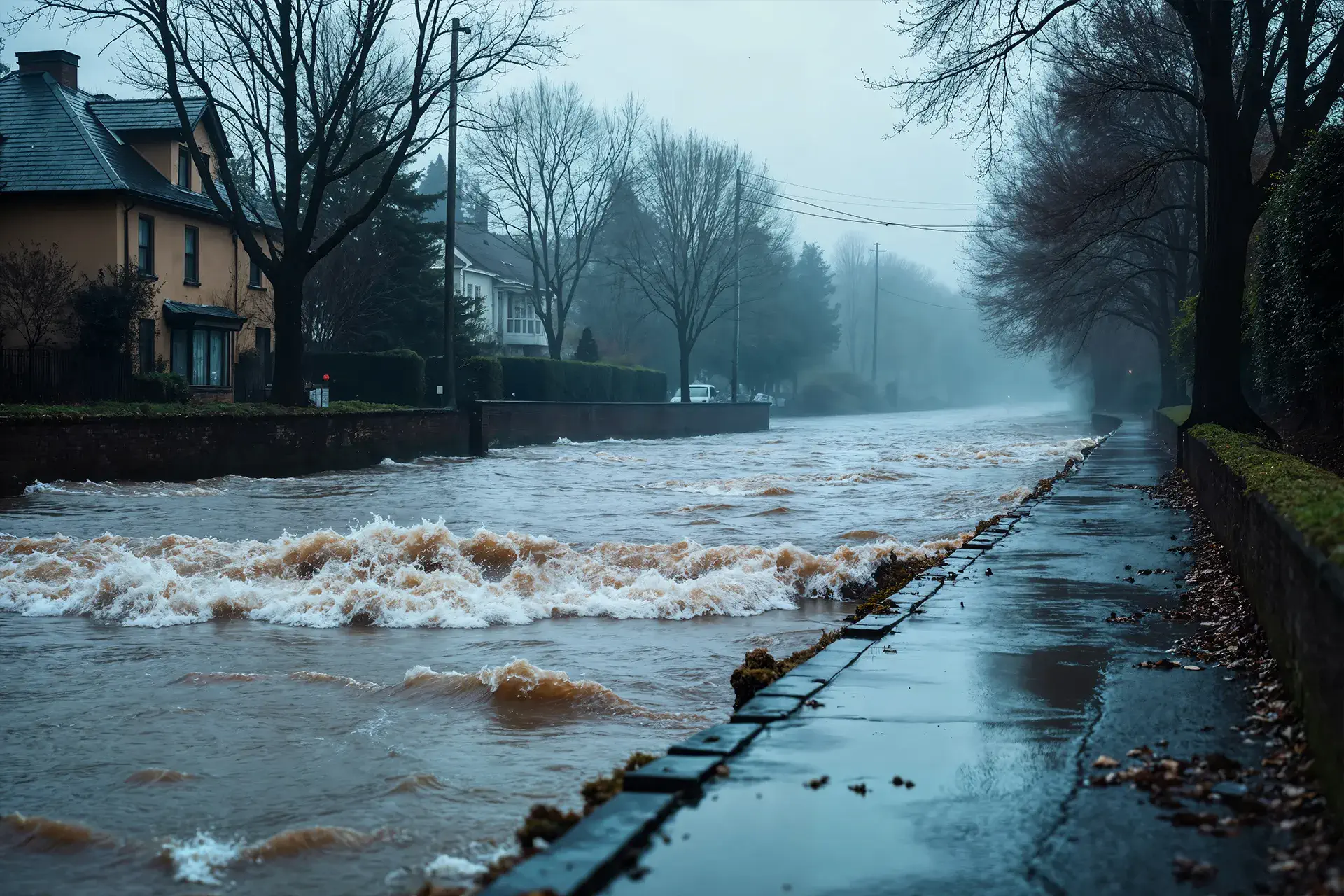
Heavy rain is one of the most common reasons homeowners report basement water damage. However, rainfall itself is rarely the real cause.
For insurance adjusters, one of the most important parts of the inspection is determining how the water entered the home. Water on the basement floor is only the result. The real investigation begins with identifying the path the water followed and the condition that allowed it to get inside.
At Zavza Seal LLC, we work with insurance adjusters across Long Island, Brooklyn, Queens, and the Bronx to investigate basement water intrusion, identify the source of the problem, and document the conditions found before repairs begin.
Heavy Rain Exposes Existing Weaknesses
Many homeowners assume the rain caused the leak. In reality, heavy rainfall often exposes problems that already existed.
When large amounts of water collect around a home’s foundation, hydrostatic pressure increases against basement walls and floors. If there is a weak point in the building envelope, water will usually find it.
The goal of the inspection is to determine where that weak point is and why it failed.
Foundation Cracks
Foundation cracks are one of the most common entry points for groundwater.
Not every crack leaks during normal weather, but prolonged or heavy rainfall increases pressure around the foundation. Water can enter through vertical cracks, horizontal cracks, or openings where the wall meets the floor.
During an inspection, it is important to determine whether the crack is active, whether there are signs of previous water intrusion, and whether movement within the foundation has contributed to the problem.
Poor Exterior Drainage
Sometimes the foundation is not the primary issue. Instead, the problem begins outside.
Improper grading can direct rainwater toward the house instead of away from it. Clogged gutters or short downspouts can dump thousands of gallons of roof runoff directly beside the foundation during a storm.
When water consistently collects around the home, even a well-built foundation can eventually experience seepage.
This is why every basement inspection should include an evaluation of exterior drainage conditions.
Window Wells
Basement window wells are another common source of water intrusion after heavy rain.
If the drain inside the well becomes clogged or the well fills faster than it can drain, water may overflow through the window frame and enter the basement.
Inspectors should look for debris, standing water, damaged seals, or evidence that water entered through the window rather than the foundation wall.
Failed Waterproofing Systems
Many homes already have waterproofing systems installed, but those systems can fail over time.
Exterior waterproofing membranes may deteriorate. Interior drainage systems can become clogged. Sump pumps may lose power during storms or fail mechanically when they are needed most.
Rather than assuming waterproofing is present and functioning, inspectors should verify whether these systems are operating as intended.
Plumbing Failures That Coincide with Rain
Not every basement leak that appears during a storm is caused by rain.
Heavy rainfall sometimes happens at the same time a plumbing fitting fails, making it easy to assume both events are connected.
Inspectors should always confirm whether the moisture originated from groundwater, roof runoff, or the home’s plumbing system before reaching conclusions.
Following the water back to its source is often the only way to distinguish between the two.
Sewer Backup
In some neighborhoods, heavy rainfall can overwhelm municipal sewer systems.
When this happens, wastewater may back up through basement floor drains or plumbing fixtures instead of entering through the foundation itself.
The location of the water, debris left behind, and visible signs around floor drains often help identify whether a sewer backup occurred.
Understanding the difference is important because the cleanup and repair process is very different from groundwater intrusion.
The Water’s Path Tells the Story
One of the biggest mistakes during a basement inspection is focusing only on where the water is found.
Water rarely stays where it enters.
It may travel behind finished basement walls, beneath flooring, through insulation, or along the top of the foundation before becoming visible.
Tracing the path of the water often reveals entry points that cannot be identified by looking only at the damaged area.
Moisture mapping, thermal imaging, and careful visual inspection all help build a clearer understanding of how the intrusion occurred.
Documentation Supports Better Claim Decisions
Root cause analysis depends on accurate documentation.
Photographs, moisture readings, exterior observations, drainage conditions, foundation defects, and evidence of the water’s travel path all contribute to a complete inspection.
The goal is not simply to document damage but to explain how the damage occurred based on observable conditions.
This information helps adjusters evaluate the loss and develop a repair scope that addresses both the damage and the source of the intrusion.
Why Adjusters Work with Zavza Seal LLC
Zavza Seal LLC has extensive experience investigating basement water intrusion throughout Long Island, Brooklyn, Queens, and the Bronx.
Our team understands how groundwater moves around foundations, how drainage failures affect homes, and how hidden moisture can spread beyond the visible damage. We provide detailed inspections, moisture mapping, and documentation that help insurance adjusters understand the root cause before repairs begin.
Frequently Asked Questions
Why does my basement only leak after heavy rain?
Heavy rainfall increases water pressure around the foundation and can expose weaknesses such as cracks, poor drainage, or failed waterproofing systems.
Can water enter a basement without a visible foundation crack?
Yes. Water can enter through the wall-floor joint, basement windows, utility penetrations, or areas where waterproofing has failed.
Why is identifying the entry point so important?
Finding the entry point helps determine how the water entered the home and allows repairs to address the actual cause instead of only the visible damage.
Does every wet basement need foundation repairs?
No. Some problems are caused by drainage issues, clogged gutters, failed sump pumps, or window wells rather than structural foundation defects.
Conclusion
Basement water intrusion after heavy rain is rarely caused by one factor alone. Foundation cracks, poor grading, clogged drainage systems, window wells, failed waterproofing, and plumbing problems can all produce similar signs of water damage.
For insurance adjusters, identifying the root cause is one of the most important parts of the inspection process. A thorough investigation that follows the water from its point of entry to the visible damage provides the information needed to accurately document the loss and develop an effective repair strategy.