
Recurring basement dampness is rarely accidental. When moisture keeps showing up, it’s a signal like a warning light on a dashboard telling you something deeper is going on. Basement waterproofing companies don’t guess when diagnosing this issue. They follow a systematic, evidence-based process designed to uncover root causes, not just visible symptoms. Understanding how this diagnosis works sheds light on why professional evaluation matters so much.
Understanding What Recurring Basement Dampness Really Means
Basement dampness isn’t just about water you can see. It’s about moisture behavior over time, materials absorbing water, and air carrying humidity where it doesn’t belong.
Difference Between Occasional Moisture and Persistent Dampness
Occasional moisture might show up after extreme weather. Persistent dampness, on the other hand, sticks around even during dry periods. Waterproofing professionals focus on patterns, not one-off events. If dampness reappears consistently, it points to an ongoing moisture pathway.
Why Dampness Keeps Coming Back in Basements
Basements sit below ground level, surrounded by soil that holds moisture like a sponge. Add pressure from groundwater, aging foundations, or poor drainage, and moisture will always find the path of least resistance. Diagnosing recurring dampness means identifying that path.
Why Professional Diagnosis Is Critical for Basement Dampness
Diagnosing basement moisture isn’t about intuition. It’s about controlled observation, data collection, and technical interpretation.
Limits of DIY Dampness Detection
Homeowners often rely on surface clues peeling paint, musty smells, or visible puddles. These signs matter, but they don’t explain why moisture is present. Without tools or training, it’s easy to treat the symptom and miss the cause.
How Professional Assessment Prevents Misdiagnosis
Basement waterproofing companies in Brooklyn use layered diagnostics. They look at structure, environment, and water behavior together. This prevents costly mistakes like sealing walls while ignoring external water pressure.
Initial Visual Inspection Used by Basement Waterproofing Companies
The diagnostic process usually begins with a detailed visual inspection. This stage sets the foundation for everything that follows.
Identifying Visible Moisture Patterns
Professionals document where moisture appears, how high it rises, and whether it’s isolated or widespread.
Wall Staining and Efflorescence
White powdery residue, known as efflorescence, indicates water migrating through masonry. It’s a key clue that moisture is moving from outside to inside, carrying minerals with it.
Floor Damp Spots and Joint Seepage
Water often enters where walls meet floors. These joints are natural weak points, and recurring dampness here often signals hydrostatic pressure below the slab.
Evaluating Basement Air Conditions
Damp air feels heavy. Professionals assess whether moisture is coming from liquid water intrusion or airborne humidity condensing on cool surfaces.
Moisture Testing and Measurement Techniques
Seeing moisture is one thing. Measuring it is another.
Use of Moisture Meters
Moisture meters allow waterproofing specialists to detect water hidden behind walls or beneath surfaces.
Surface vs Deep Material Moisture Readings
Surface moisture might come from condensation, while deep readings suggest water intrusion. Comparing both helps narrow down the source.
Relative Humidity and Condensation Testing
High humidity levels can cause dampness without leaks. Professionals measure humidity to determine whether ventilation, temperature differences, or external moisture are contributing factors.
Foundation and Structural Assessment
The foundation is the barrier between your basement and the surrounding soil. If it’s compromised, dampness follows.
Checking Foundation Walls and Footings
Cracks aren’t always structural failures, but they are moisture highways.
Cracks, Cold Joints, and Construction Seams
Cold joints where concrete pours meet are common seepage points. Professionals examine these closely to understand how water is entering.
Settlement and Structural Movement Indicators
Shifting foundations create gaps that didn’t exist before. Diagnosing dampness often includes identifying subtle movement patterns
Exterior Water Source Investigation
What happens outside your home directly affects what happens inside your basement.
Soil Grading and Drainage Patterns
If soil slopes toward the foundation, water will follow gravity straight to basement walls. Waterproofing companies assess grading as part of dampness diagnosis. It also helps in the basement sealing.
Hydrostatic Pressure and Water Table Influence
When groundwater pressure builds, it pushes moisture through concrete. Understanding local water tables is critical, especially for Waterproofing Companies brooklyn dealing with dense urban soil conditions.
Roof Runoff and Gutter Discharge Analysis
Water dumped near the foundation increases saturation. Professionals trace runoff paths to see where water accumulates.
Plumbing and Internal Water Source Evaluation
Not all basement dampness comes from outside.
Hidden Pipe Leaks and Condensation Lines
Slow leaks behind walls or under floors can mimic groundwater issues. Professionals isolate plumbing systems to rule this out.
HVAC and Appliance Moisture Contributions
Condensation from HVAC lines or water heaters can quietly elevate moisture levels over time.
Mold, Microbial Growth, and Odor Assessment
Mold doesn’t grow without moisture. Its presence is diagnostic evidence.
Why Mold Signals Long-Term Moisture Problems
Surface mold indicates ongoing dampness, not a one-time event. Waterproofing professionals use mold patterns to map moisture history.
Interpreting Dampness Patterns Over Time
Moisture tells a story but only if you know how to read it.
Seasonal vs Year-Round Moisture Behavior
Seasonal dampness may relate to rainfall or snowmelt. Year-round dampness often points to groundwater pressure or structural vulnerabilities.
Diagnostic Reporting and Root Cause Mapping
Diagnosis isn’t complete until findings are organized and explained.
Translating Findings Into Actionable Insights
Professional reports connect symptoms to causes, showing how moisture travels from source to basement interior.
How Waterproofing Companies Brooklyn Apply Local Knowledge
Local experience matters more than most people realize.
Climate, Soil, and Building Age Considerations
Older buildings, dense soil, and coastal moisture patterns all affect how dampness develops. Waterproofing Companies brooklyn factor these variables into every diagnosis.
Role of Experienced Firms Like Zavza Seal LLC
Diagnosis improves with experience.
Structured Diagnostic Frameworks
Companies like Zavza Seal LLC rely on proven assessment frameworks rather than assumptions. Each inspection follows a logical progression that reduces uncertainty and improves accuracy.
Common Misdiagnoses and Why They Happen
Many dampness problems persist because the original diagnosis missed something.
Treating Symptoms Instead of Sources
Painting over stains or installing dehumidifiers without addressing water entry points often delays not solves the problem.
Zavza Seal LLC Serving the Canarsie Community and Beyond in Brooklyn
Zavza Seal LLC is dedicated to serving the diverse needs of the local community of Brooklyn, including individuals residing in neighbourhoods like Canarsie. With its convenient location near landmarks such as the “Rehoboth Open Bible Church” and major intersections like Ralph Ave and Farragut Rd (coordinates: 40.6359516, -73.919379), we offer waterproofing services.
Get Waterproofing Services at Canarsie Now
Call Us or Contact Us: +17184007005
Navigate from Canarsie to Zavza Seal LLC Now
Recurring basement dampness isn’t mysterious when examined methodically. Basement waterproofing companies diagnose these issues by combining visual evidence, moisture data, structural analysis, and environmental context. When all these elements align, the true cause becomes clear and lasting solutions become possible
Basement Waterproofing Companies Diagnosis For Recurring Basement Dampness
- Prevalence of Basement Moisture Issues:
- Over 60% of basements in U.S. homes experience leaks or moisture problems.
- Approximately 98% of basements will face some form of water damage during their lifetime.
- 65-70% of leaks originate at the floor-wall joint (“cove joint”).
- Key Diagnostic Factors:
- Age of Home: Homes over 20 years old have a >60% chance of leaks due to degraded waterproofing.
- Soil Type: Clay soils create high hydrostatic pressure, causing sustained leaks; sandy soils cause rapid water influx.
- Water Entry Points:
- Floor-wall joint (65-70%)
- Wall cracks (significant portion)
- Floor slab seepage
- Environmental Conditions: Regions with heavy rainfall or poor drainage increase leak risk.
- Impact on Property:
- Mold and fungus growth occur in ~38% of damp basements.
- Water damage can reduce property value by up to 25%.
- Insurance claims for water damage cost $2.5 billion annually in the U.S.
- Diagnostic Tools & Methods Used by Companies:
- Visual inspection for damp spots, efflorescence, and mold.
- Moisture meters and infrared cameras to detect hidden leaks.
- Soil and drainage assessment around foundation.
- Hydrostatic pressure analysis to identify water pathways.
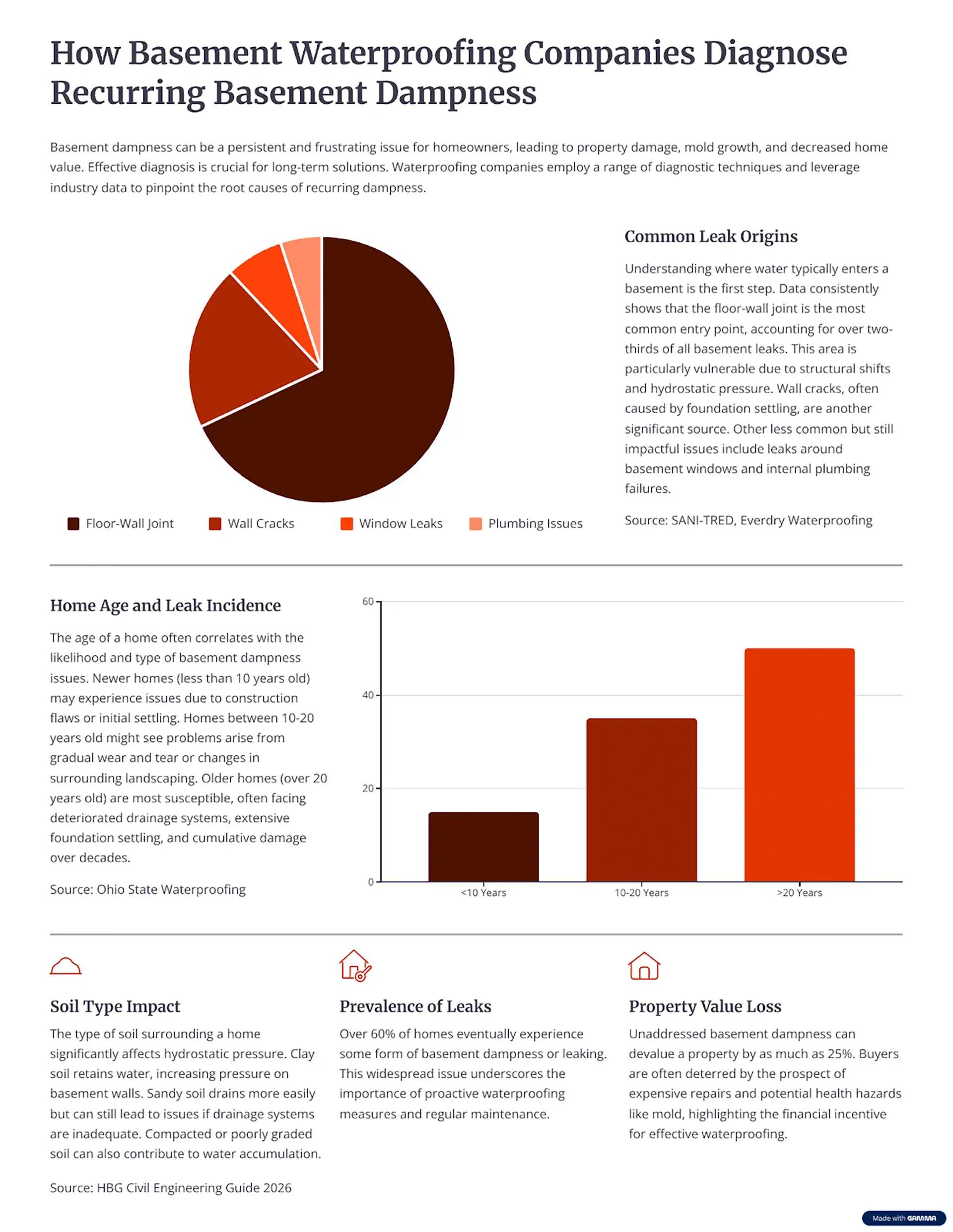
Source: HBG Civil Engineering Guide 2026
FAQs
1. Why does basement dampness return even after surface repairs?
Because surface repairs often address visible symptoms rather than underlying moisture pathways like groundwater pressure or foundation seepage.
2. Can high humidity alone cause basement dampness?
Yes. Poor ventilation and temperature differences can cause condensation that mimics water intrusion.
3. How long does professional dampness diagnosis usually take?
A thorough diagnostic assessment typically requires several hours to ensure all moisture sources are evaluated.
4. Are foundation cracks always responsible for damp basements?
Not always. While cracks are common entry points, soil saturation, drainage issues, and condensation can also cause dampness.
5. Why is local expertise important in diagnosing basement dampness?
Local soil conditions, climate patterns, and building practices influence how moisture behaves, making regional knowledge essential for accurate diagnosis.