
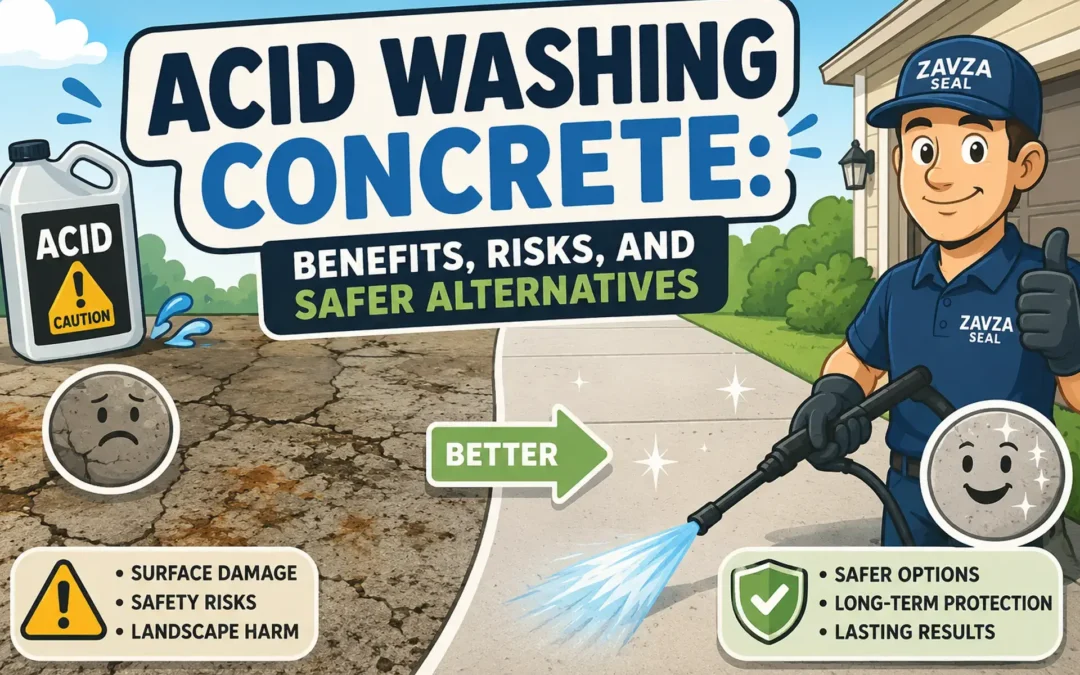
What Is Acid Washing Concrete?
Acid washing concrete is a cleaning method that uses a diluted acid solution to remove stubborn stains, discoloration, mineral deposits, and surface buildup from concrete. It is commonly used on driveways, patios, sidewalks, garage floors, and other concrete surfaces that have become stained over time.
During the process, the acid reacts with the top layer of the concrete and helps break down contaminants that regular cleaning methods may not remove. This can improve the appearance of the surface and prepare it for treatments such as sealing or coating.
Many homeowners consider acid washing concrete when standard cleaning methods fail to remove deep stains or years of buildup. However, while acid washing can be effective, it is important to understand both its benefits and potential risks before using it.
How Acid Removes Stains and Discoloration
Over time, concrete can develop stains from dirt, rust, hard water, fertilizer, mold, mildew, and other contaminants. Acid works by dissolving mineral deposits and breaking down surface stains that have bonded to the concrete.
An acid wash concrete treatment is often used to remove:
- Rust stains
- Efflorescence (white powdery deposits)
- Hard water and mineral buildup
- Surface discoloration
- Construction residue
- Old coating residue
Because acid is highly reactive, it can clean areas that pressure washing alone may not fully restore.
Common Acids Used for Concrete Cleaning
Several types of acids can be used for concrete cleaning, including:
- Muriatic acid – One of the most common and strongest options.
- Phosphoric acid – Often used for rust stain removal.
- Citric acid-based cleaners – A milder option for lighter cleaning needs.
The type of acid and its concentration can significantly affect the results. Using the wrong product or applying it incorrectly can damage the concrete surface.
Acid Washing vs. a Standard Concrete Wash
Although the terms are sometimes used interchangeably, acid washing and a standard concrete wash are not the same.
A standard concrete wash typically uses water, detergents, or pressure washing equipment to remove dirt, algae, mold, and surface debris. This method cleans the surface without chemically altering the concrete.
Acid washing is a more aggressive process that chemically reacts with the concrete itself. While it can remove tougher stains, it also carries a greater risk of surface damage if not performed properly.
For many cleaning projects, pressure washing or specialized concrete cleaners may be enough to restore the appearance of the concrete without the risks associated with acid.
Why Homeowners Acid Wash Concrete
Concrete is one of the most durable materials used around a home, but it is constantly exposed to weather, moisture, dirt, and everyday wear. Over time, stains and discoloration can make concrete surfaces look old and neglected.
Homeowners often turn to acid washing concrete when they want to restore the appearance of a driveway, patio, sidewalk, or garage floor without replacing the concrete.
Removing Rust Stains
Rust stains are among the most common reasons homeowners choose to acid wash concrete.
These stains can develop from:
- Fertilizer products containing iron
- Metal patio furniture left on concrete surfaces
- Rusting tools and equipment
- Irrigation systems that contain iron-rich water
Rust stains often penetrate below the surface, making them difficult to remove with a standard concrete wash or pressure washing alone. Acid cleaning is frequently used because it can break down these stubborn deposits more effectively.
Removing Efflorescence
Efflorescence is the white, chalky residue that sometimes appears on concrete surfaces.
It develops when water moves through the concrete and carries dissolved minerals to the surface. As the water evaporates, the minerals are left behind, creating a powdery white coating.
Many homeowners use an acid wash concrete treatment to remove efflorescence because it can dissolve these mineral deposits and restore the surface appearance.
However, it is important to understand that cleaning the residue only addresses the symptom. If moisture continues moving through the concrete, efflorescence will often return. In many cases, the underlying water intrusion issue should also be addressed.
Preparing Concrete for Coatings
Acid washing is commonly used before applying protective coatings or decorative finishes.
By removing contaminants and lightly etching the surface, acid washing can help coatings bond more effectively to the concrete.
Common applications include:
- Epoxy garage floor coatings
- Concrete sealers
- Decorative concrete finishes
- Paint and coating systems
Proper surface preparation is often one of the most important factors in achieving a long-lasting finish.
Restoring the Appearance of Aging Concrete
Many homeowners simply want to improve the appearance of older concrete surfaces.
Years of exposure to traffic, weather, moisture, and stains can leave concrete looking worn and discolored. Acid washing is sometimes used to brighten and refresh surfaces such as:
- Driveways
- Sidewalks
- Patios
- Walkways
- Garage floors
While acid washing can improve appearance, it is important to remember that cleaning does not repair structural problems. Cracks, spalling, settlement, and moisture-related damage may require repair solutions beyond cleaning alone. This is why it is often helpful to inspect the condition of the concrete before choosing a cleaning method.
Benefits of Acid Washing Concrete
When used correctly, acid washing can be an effective way to clean and restore concrete surfaces. It is often used on driveways, patios, sidewalks, garage floors, and other areas where standard cleaning methods may not be enough to remove deep stains and discoloration.
While acid washing is not the right solution for every situation, it does offer several benefits when performed properly.
Removes Tough Surface Stains
One of the biggest advantages of acid washing concrete is its ability to remove stubborn stains that are difficult to clean with water or pressure washing alone.
Acid washing can help eliminate:
- Rust stains
- Mineral deposits
- Hard water marks
- Construction residue
- Fertilizer stains
- Surface discoloration
Because the acid reacts with contaminants on the surface, it can often remove stains that have penetrated into the concrete over time.
Improves Surface Appearance
Concrete naturally loses its appearance as it ages. Dirt, weather exposure, moisture, and everyday use can leave surfaces looking dull and neglected.
Acid washing can brighten concrete and create a cleaner, more uniform appearance. Many homeowners use it to refresh driveways, walkways, patios, and garage floors without the cost of replacing the concrete.
For concrete that is structurally sound, cleaning can be a cost-effective way to improve curb appeal.
Helps Prepare Concrete for Sealers
Proper surface preparation is one of the most important steps before applying a concrete sealer or coating.
Acid washing removes contaminants that may prevent sealers from bonding properly to the concrete surface. It also lightly opens the pores of the concrete, helping certain coatings adhere more effectively.
This is why acid washing is often used before:
- Concrete sealing
- Epoxy floor installations
- Decorative concrete coatings
- Concrete staining projects
A properly prepared surface can help coatings last longer and perform better.
Can Restore Older Concrete Surfaces
Older concrete often develops years of built-up stains, discoloration, and surface residue.
In some cases, acid washing can help restore the appearance of aging concrete and make it look cleaner and more uniform. Homeowners often choose this option when they want to improve the appearance of a driveway, patio, or sidewalk without investing in replacement.
However, appearance and condition are not always the same thing. While cleaning may improve how concrete looks, it does not necessarily improve the structural condition of the concrete itself.
The Hidden Risks of Acid Washing Concrete
Many online guides focus on the benefits of acid washing, but fewer discuss the potential downsides.
At Zavza Seal, we regularly inspect concrete surfaces that appear clean on the surface but have underlying issues that cleaning alone cannot solve. Before deciding whether acid washing is the right choice, homeowners should understand the risks involved.
Surface Etching
Acid works by reacting with the concrete surface. If the solution is too strong or left on the surface for too long, it can permanently etch the concrete.
Etching creates a rougher texture and can leave the surface looking uneven or worn. In severe cases, the damage may be difficult or impossible to reverse.
What begins as a cleaning project can sometimes result in a surface that requires additional repairs or refinishing.
Accelerated Concrete Deterioration
Concrete is durable, but it is not indestructible.
Repeated acid treatments can gradually weaken the top layer of concrete. Over time, excessive acid exposure may contribute to:
- Surface wear
- Increased porosity
- Faster moisture penetration
- Reduced durability
This is especially concerning for older concrete that may already be experiencing age-related deterioration.
Damage to Nearby Landscaping
Acid does not always stay where it is intended.
If not properly controlled, runoff can affect surrounding landscaping and outdoor surfaces.
Potential damage may include:
- Burned grass
- Damaged plants
- Soil contamination
- Staining of nearby materials
Protecting landscaping is one of the reasons many homeowners choose professional cleaning methods instead of handling strong acids themselves.
Safety Hazards
Acid washing involves chemicals that require careful handling.
Potential risks include:
- Skin burns
- Eye injuries
- Respiratory irritation
- Harmful fumes
Improper mixing, application, or disposal can create safety hazards for both homeowners and nearby family members.
Even experienced contractors use protective equipment and follow strict procedures when working with acid-based products.
Can Hide Bigger Concrete Problems
One of the most overlooked risks of acid washing is that it can temporarily improve appearance while leaving more serious issues untreated.
A freshly cleaned driveway or patio may look better, but underlying damage can still remain.
Common problems we often find beneath stained or discolored concrete include:
- Structural cracks
- Surface spalling and flaking
- Water intrusion
- Freeze-thaw damage
- Settlement and sinking sections
- Drainage-related deterioration
In many cases, stains and discoloration are symptoms of a larger moisture problem rather than the root cause.
Cleaning concrete may improve appearance, but it does not repair underlying structural problems. If cracks, spalling, settlement, or water damage are present, addressing those issues early can help prevent more expensive repairs in the future.
For that reason, it is often worth evaluating the overall condition of the concrete before deciding whether cleaning alone is the right solution.
Case Study – Cleaning Wasn’t Enough for a Long Island Driveway
Project Background
A Long Island homeowner contacted Zavza Seal LLC due to a worn and stained concrete driveway showing years of weather exposure and vehicle traffic.
They initially planned an acid wash to improve appearance, but requested an inspection first.
What We Found
Our evaluation revealed deeper issues beyond surface staining, including:
- Cracks allowing water intrusion
- Freeze-thaw damage from seasonal temperature changes
- Early surface deterioration in multiple areas
The driveway’s condition showed that moisture had been affecting the concrete for years. Cleaning alone would not stop the ongoing damage.
Our Recommendation
Instead of only cleaning, we recommended a repair-first approach:
- Repair damaged concrete sections
- Seal active cracks
- Address moisture entry points
- Clean and protect the surface after repairs
This ensured both appearance and structural condition were improved.
Results
After repairs and protection:
- The driveway looked cleaner and more uniform
- Moisture-related risks were reduced
- Durability and performance improved
- Overall lifespan of the surface was extended
Key Takeaway
Concrete cleaning improves appearance, but it does not fix underlying damage. When cracks, water intrusion, or deterioration are present, addressing the root cause is essential for long-term results.
Safer Alternatives to Acid Washing Concrete
While acid washing can be effective in certain situations, it is not always the safest or best option for every concrete surface.
Depending on the condition of the concrete and the type of staining involved, several alternatives may provide excellent results with fewer risks to the surface, surrounding landscaping, and the homeowner.
Pressure Washing Concrete
For many homeowners, pressure washing is the first and safest place to start.
A concrete pressure washer can remove years of accumulated dirt, mildew, algae, and surface stains without the use of harsh chemicals. In many cases, a pressure washer to clean concrete can dramatically improve appearance while reducing the risks associated with acid treatments.
Pressure washing works particularly well for:
- Dirt and grime buildup
- Algae and mildew growth
- Surface stains
- Seasonal discoloration
- General maintenance cleaning
When using a clean concrete pressure washer, proper pressure settings are important. Excessive pressure can damage aging or weakened concrete, while insufficient pressure may not provide effective cleaning.
For most residential concrete surfaces, moderate pressure levels are often enough to achieve good results without causing unnecessary wear.
Compared to acid washing, pressure washing offers several advantages:
- No harsh chemical exposure
- Lower risk of concrete damage
- Safer for surrounding landscaping
- More environmentally friendly
- Easier maintenance over time
For many driveways, patios, and sidewalks, pressure washing may be all that is needed.
Biodegradable Concrete Cleaners
Modern biodegradable concrete cleaners can often remove stains without the risks associated with strong acids.
These products are designed to break down dirt, grease, organic growth, and other contaminants while being gentler on concrete surfaces.
Benefits include:
- Safer for grass and plants
- Reduced environmental impact
- Less risk of surface damage
- Easier handling and application
For homeowners looking for a more environmentally friendly cleaning solution, biodegradable cleaners can be an effective alternative.
Soft Washing Methods
Soft washing uses low-pressure water combined with specialized cleaning solutions to remove contaminants from surfaces.
Unlike pressure washing, which relies primarily on water pressure, soft washing relies on cleaning agents to break down stains and organic growth.
Soft washing can be a good option for:
- Light staining
- Mold and mildew
- Surface algae
- Delicate concrete surfaces
Because lower pressure is used, there is less risk of damaging older concrete that may already be showing signs of wear.
Concrete Sealing After Cleaning
Regardless of the cleaning method used, protecting the concrete afterward is often just as important as cleaning it.
Concrete is naturally porous, meaning it absorbs water, salts, and contaminants over time. Applying a quality sealer can help reduce this absorption and provide long-term protection.
Benefits of sealing concrete include:
- Reduced staining
- Improved resistance to moisture penetration
- Easier future cleaning
- Protection against freeze-thaw damage
- Extended concrete lifespan
For many homeowners, the best approach is not simply cleaning the concrete, but cleaning it properly and then protecting it from future damage.
When Concrete Needs Repair Instead of Cleaning
Cleaning can improve the appearance of concrete surfaces, but it does not fix underlying structural or moisture-related problems. In many cases, especially for driveways, walkways, and slabs, damage goes deeper than surface staining. When these issues are present, repair, not cleaning, is the only long-term solution. This is where professional assessment from a contractor like Zavza Seal LLC becomes essential.
Signs to Watch For:
Expanding Cracks
Small hairline cracks that continue to widen are a clear sign of structural movement or ongoing stress. Power washing or acid cleaning will not stop cracks from growing. In fact, water can sometimes enter these openings and make the problem worse over time.
Surface Flaking or Spalling
When the top layer of concrete begins to peel, chip, or flake away, it usually indicates freeze-thaw damage or long-term moisture exposure. Cleaning may remove loose debris, but it cannot restore the lost surface material.
Uneven or Settling Concrete
Sunken or sloped sections of concrete often point to soil movement or voids beneath the slab. This is a structural issue that cleaning cannot correct. It typically requires lifting, leveling, or subgrade stabilization.
Water Pooling Around Concrete
If water consistently collects on or around concrete surfaces, it suggests drainage problems or improper grading. This trapped moisture accelerates deterioration and should be addressed at the source, not just cleaned on the surface.
Repeated Staining Caused by Moisture Problems
Stains that return shortly after cleaning often indicate ongoing water intrusion. This could be from groundwater, poor drainage, or hidden cracks allowing moisture to rise through the slab.
In all of these cases, cleaning alone is only cosmetic. Without repairing the underlying cause, the damage will continue to progress.
How to Protect Concrete After Cleaning
Once concrete has been cleaned and repaired where necessary, long-term protection is key to maintaining its strength and appearance. Preventive maintenance helps avoid costly structural repairs later and extends the lifespan of the surface.
Best Practices
Seal Concrete Regularly
Applying a high-quality concrete sealer helps block moisture penetration, reduce staining, and protect against freeze-thaw cycles. Sealing should be done periodically, depending on exposure and wear.
Repair Cracks Early
Even small cracks should be sealed as soon as they appear. Early intervention prevents water from entering and expanding damage beneath the surface.
Improve Drainage
Proper grading and drainage systems help move water away from concrete surfaces. This reduces pooling, erosion, and long-term structural weakening.
Avoid Harsh Chemicals
Strong acids and de-icing chemicals can break down the surface of concrete over time. Using gentler cleaning agents helps preserve surface integrity.
Address Water Intrusion Quickly
Any signs of water infiltration should be investigated and repaired promptly. Persistent moisture is one of the leading causes of concrete deterioration.
When combined, these steps help maintain durable, long-lasting concrete surfaces and reduce the need for major repairs in the future.
Why Long Island Homeowners Trust Zavza Seal
Homeowners across Long Island choose Zavza Seal because they focus on more than just surface-level improvements. Instead of offering quick cosmetic fixes, the approach is centered on identifying and resolving the real causes of concrete and foundation problems.
Their expertise also extends to foundation systems, helping homeowners address issues that go beyond the surface and may impact the stability of the entire structure.
Moisture management is another key part of their work. By controlling water intrusion and drainage problems, they help prevent recurring damage that cleaning alone cannot solve. This long-term approach ensures homeowners don’t just get a cleaner surface, but a more durable and protected concrete system built to last.
FAQ Section
Is acid washing concrete safe?
Acid washing can be safe when done correctly, but it is highly aggressive and must be handled with care. Improper use can weaken the surface and cause permanent damage.
Can acid damage concrete?
Yes. If used in the wrong concentration or too frequently, acid can erode the concrete surface, expose aggregate, and reduce long-term durability.
What is the best alternative to acid washing concrete?
Safer alternatives include pressure washing, specialized concrete cleaners, and professional surface treatments that remove stains without weakening the slab.
Can a concrete pressure washer remove stains without acid?
Yes, pressure washing can remove dirt, algae, and surface grime. However, it may not remove deep stains caused by oil, rust, or moisture intrusion.
How often should concrete be cleaned?
Most concrete surfaces benefit from cleaning once or twice a year, depending on weather exposure, usage, and surrounding environmental conditions.
Does cleaning concrete repair cracks?
No. Cleaning only removes surface debris. Cracks are structural issues and must be sealed or repaired separately to prevent further damage.
Should concrete be sealed after cleaning?
Yes. Sealing after cleaning helps protect the surface from moisture, staining, and freeze-thaw damage, extending the life of the concrete.