
Project Overview
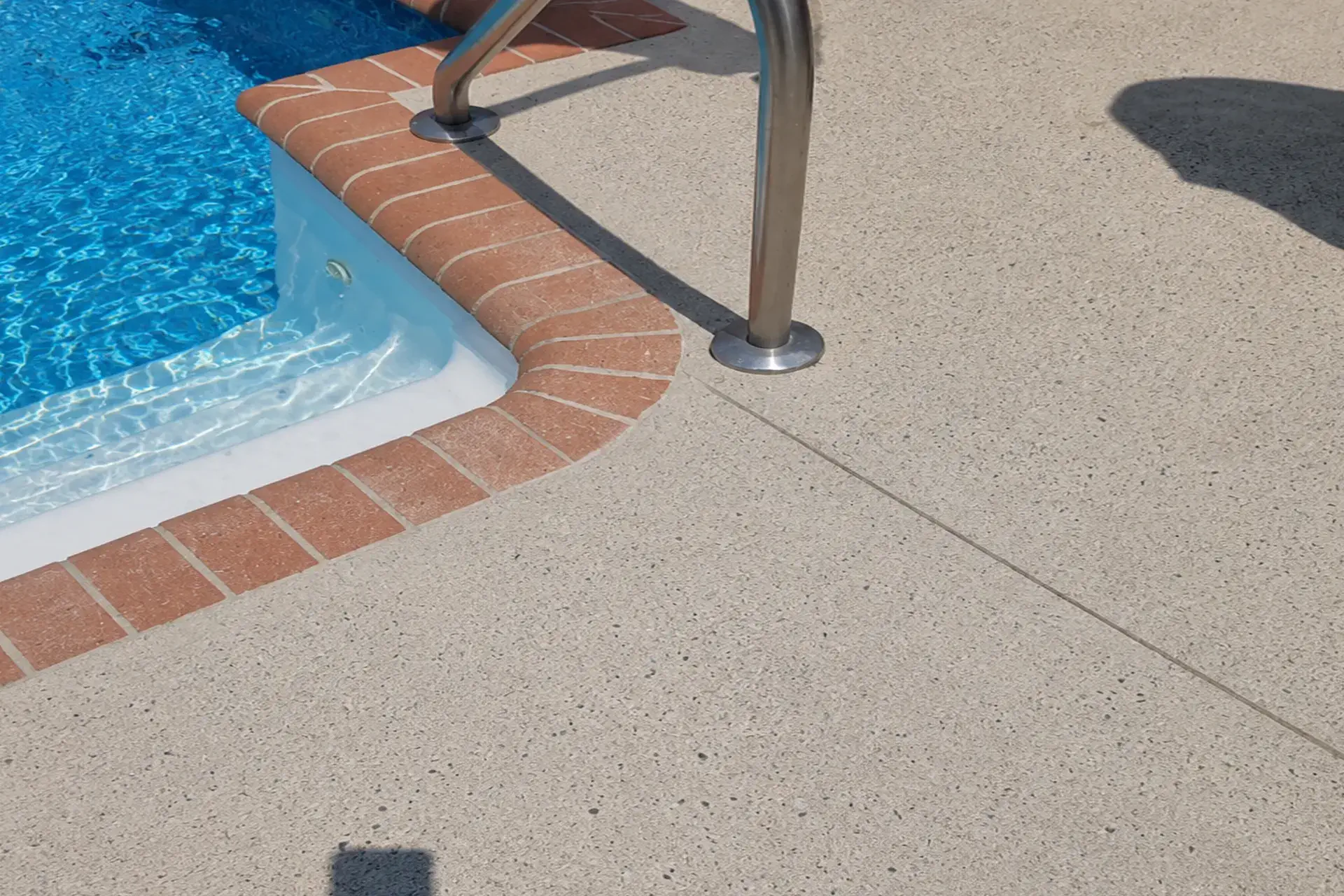
The Zavza Seal team was contacted by a homeowner in Glen Cove, NY who noticed sections of the concrete pool deck had begun to sink and become uneven. The affected areas were located along the west and north sides of the swimming pool.
Uneven concrete around a pool is more than just an appearance issue. It creates tripping hazards, allows water to collect in unwanted areas, and can lead to further deterioration if left untreated.
After a detailed inspection, our team determined that the concrete slabs could be restored without the need for costly demolition and replacement.
The Problem
Over the years, water had worked its way beneath the concrete pool deck. As the soil below became saturated and shifted, large voids developed underneath the slabs.
Without proper support, the concrete began to sink into these empty spaces. This created uneven walking surfaces around the pool and increased the risk of accidents.
The homeowner was also concerned about water drainage. As the slabs settled, the original slope was lost, allowing water to collect in areas where it should have been draining away.
During our evaluation, we considered both polyjacking and mudjacking as potential solutions. While polyjacking is often a good option, the large open spaces near the wooden fence would have made the process less efficient and more costly. For this particular project, mudjacking offered the most effective and economical solution.
Our Solution
Rather than removing and replacing the existing concrete, our team used a mudjacking process to lift and stabilize the slabs.
The first step was carefully cutting the expansion joints throughout the affected concrete sections. This allowed each slab to move independently during the lifting process and reduced the risk of additional stress on the surrounding concrete.
Next, small holes were drilled into the slabs at strategic locations. Through these openings, we pumped a stone slurry grout beneath the concrete.
As the material flowed underneath the slab, it filled the empty voids that had developed over time. Once those gaps were completely filled, the pressure from the grout gradually and evenly lifted the concrete back toward its original position.
Throughout the process, our technicians carefully monitored the elevation of the slab to ensure proper alignment and drainage. We adjusted the final height so that water would naturally flow away from surrounding structures while maintaining a safe and even surface around the pool.
After the lifting was complete, the drilled holes were patched and the expansion joints were sealed to help protect the concrete from future water infiltration.
The Result
The pool deck was successfully restored without the expense and disruption of a full replacement.
The concrete slabs were lifted back into position, the underlying voids were filled, and the walking surface around the pool became safer and more stable. The improved slope also helps direct water away from vulnerable areas, reducing the risk of future settlement.
By stabilizing the soil beneath the slabs and restoring proper support, the homeowner gained a longer-lasting solution that helps protect both the pool deck and the surrounding property.
Why Mudjacking Was the Right Choice?
Many homeowners assume that sunken concrete must be removed and replaced. In many cases, that is not necessary.
Mudjacking can be an excellent solution when concrete slabs are structurally sound but have settled because of soil erosion or voids beneath them. The process restores support underneath the slab, improves safety, and is often more cost-effective than replacement.
For this Glen Cove project, mudjacking provided the most practical solution because it efficiently filled large underground voids while allowing precise control over the slab elevation.