
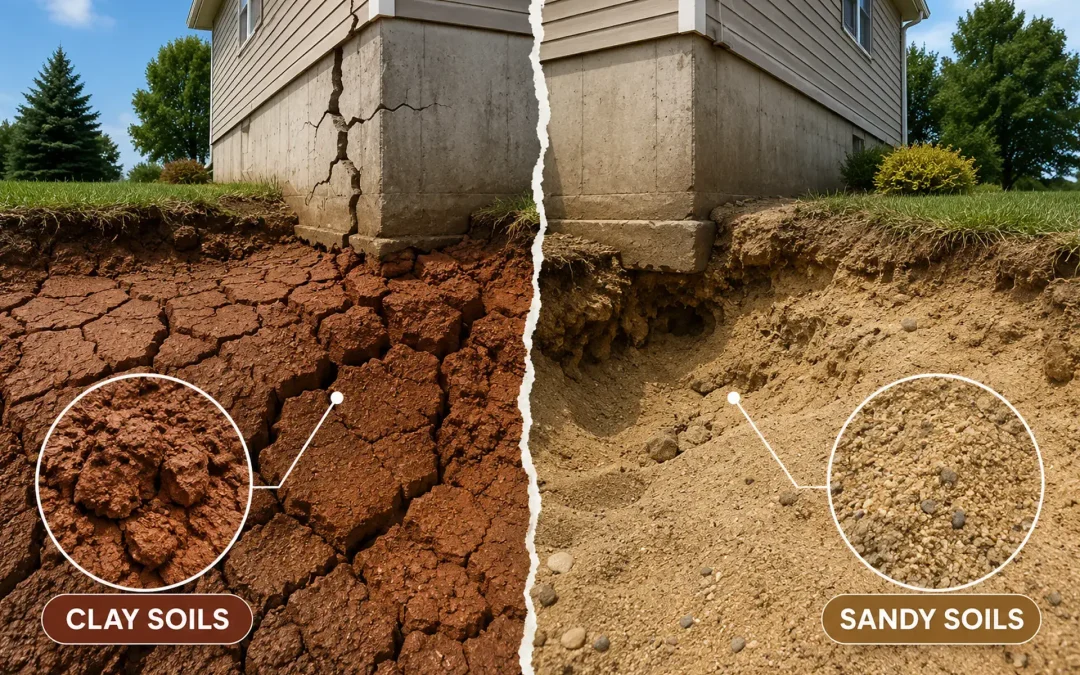
Clay Soil vs Sandy Soil Foundation Problems
The soil beneath your home plays a much bigger role than many homeowners realize. Even if your foundation is built with quality materials, the type of soil underneath it can affect how well it performs over time.
Two of the most common soil types that cause foundation problems are clay soil and sandy soil. While both can damage a home’s foundation, they do so in very different ways.
Understanding these differences can help you spot early warning signs and avoid expensive repairs.
Why Does Soil Matter for Your Foundation?
Your home’s foundation depends on stable soil for support. As soil changes due to weather, moisture, and temperature, it can shift, expand, or settle. These movements place stress on the foundation, which may eventually lead to cracks, uneven floors, sticking doors, or water intrusion.
No matter how well a house is built, unstable soil conditions can create foundation problems if they are not properly managed.
Clay Soil Foundation Damage
Clay soil is one of the most challenging soil types for foundations because it expands when it absorbs water and shrinks as it dries.
After heavy rainfall, clay soil can swell and push against foundation walls. During dry weather, it contracts and leaves empty spaces beneath parts of the foundation. This continuous cycle of expansion and shrinkage creates movement that can slowly damage the structure.
Common signs of clay soil foundation damage include:
- Stair step cracks in brick or masonry
- Cracks in basement walls
- Uneven or sloping floors
- Doors and windows that stick
- Gaps between walls and ceilings
- Foundation settlement
Clay soil problems often become worse after long periods of heavy rain followed by drought.
Sandy Soil Foundation Issues
Unlike clay, sandy soil does not expand very much when it becomes wet. Instead, it allows water to drain through quickly.
While this may sound like an advantage, sandy soil has its own challenges. Heavy rainfall can wash away fine particles beneath a foundation, reducing the soil’s ability to support the structure. This process can lead to uneven settlement.
If drainage around the home is poor, sandy soil may gradually erode, causing sections of the foundation to sink.
Common sandy soil foundation issues include:
- Uneven foundation settlement
- Cracks in walls and floors
- Gaps around windows and doors
- Sloping floors
- Soil erosion around the foundation
- Voids beneath concrete slabs
Homes built near coastal areas or locations with naturally sandy ground are often more vulnerable to these problems.
Clay Soil vs Sandy Soil Foundation Problems
Although both soil types can damage a foundation, the causes are very different.
| Clay Soil | Sandy Soil |
| Expands when wet | Drains water quickly |
| Shrinks during dry weather | Can wash away during heavy rain |
| Pushes against foundation walls | Allows foundation to settle unevenly |
| Causes seasonal movement | Causes erosion and loss of support |
| High risk of wall cracking | High risk of settlement |
The right repair depends on understanding what type of soil is affecting the home.
Which Soil Type Causes More Foundation Problems?
There is no single answer because every property is different.
Clay soil usually creates more noticeable movement because it constantly expands and contracts throughout the year. This repeated pressure often causes wall cracks and shifting foundations.
Sandy soil usually causes problems more slowly. However, when erosion becomes severe, the resulting settlement can be just as costly to repair.
The local climate, drainage, grading, and construction methods all play a role in how soil affects a home’s foundation.
Warning Signs That Your Soil May Be Affecting Your Foundation
Many homeowners first notice foundation problems inside their home before realizing the soil is responsible.
Watch for signs such as:
- Cracks in drywall
- Foundation wall cracks
- Basement water intrusion
- Uneven floors
- Doors that no longer close properly
- Windows that become difficult to open
- Exterior brick or siding cracks
- Separation around garage doors
If these problems continue to worsen, it is important to have your foundation inspected before the damage becomes more extensive.
How Foundation Problems Are Repaired
Every foundation repair begins with identifying the source of the movement.
Depending on the condition of the property, repairs may include:
- Structural crack repair
- Carbon fiber reinforcement
- Foundation underpinning
- Basement waterproofing
- Interior drainage systems
- Exterior drainage improvements
- Soil grading corrections
- Crawl space support systems
Addressing both the soil conditions and the foundation damage provides the best long term solution.
Case Study: Helping a Long Island Homeowner Protect Their Foundation
A homeowner on Long Island contacted Zavza Seal after noticing new cracks forming along their basement walls. Several doors had become difficult to close, and water occasionally entered the basement after heavy rain.
During our inspection, we found that expansive clay soil around the foundation was contributing to seasonal movement. Water was collecting near the home because of poor drainage, causing the soil to repeatedly expand and shrink.
Our team installed a complete waterproofing and drainage system to move water away from the foundation. We also repaired the structural cracks and reinforced the affected wall using proven foundation repair methods.
After the work was completed, the homeowner reported that the basement remained dry during heavy rain, and no new foundation movement was observed. Early repairs helped prevent more extensive structural damage and gave the homeowner confidence that their foundation was properly protected.
Why Homeowners Choose Zavza Seal?
At Zavza Seal, we understand that every foundation problem starts with finding the real cause. Our experienced team carefully evaluates the soil conditions, drainage, and structural concerns before recommending a repair solution.
Whether your home is affected by expansive clay soil, sandy soil settlement, water intrusion, or foundation movement, we provide long lasting solutions designed to protect your investment.
Protect Your Foundation Before Small Problems Become Big Repairs
The type of soil beneath your home has a direct impact on your foundation’s health. Clay soil foundation damage and sandy soil foundation issues may develop differently, but both can lead to expensive structural repairs if left untreated.
If you’ve noticed cracks, uneven floors, sticking doors, or basement water problems, don’t wait for the damage to get worse. Contact Zavza Seal for a professional foundation inspection and let our team help you protect your home with the right repair solution.
Frequently Asked Questions
Is clay soil bad for house foundations?
Clay soil can cause foundation problems because it expands when wet and shrinks when dry. This movement places repeated pressure on foundation walls and footings.
Does sandy soil cause foundation cracks?
Yes. Sandy soil can erode over time, allowing parts of a foundation to settle unevenly, which may lead to cracks.
Can foundation problems caused by soil be repaired?
Yes. Many soil related foundation problems can be repaired using structural reinforcement, waterproofing, drainage improvements, and foundation stabilization.
How do I know what type of soil is under my home?
A professional foundation inspection can often identify soil related issues. In some cases, soil testing may also be recommended.