
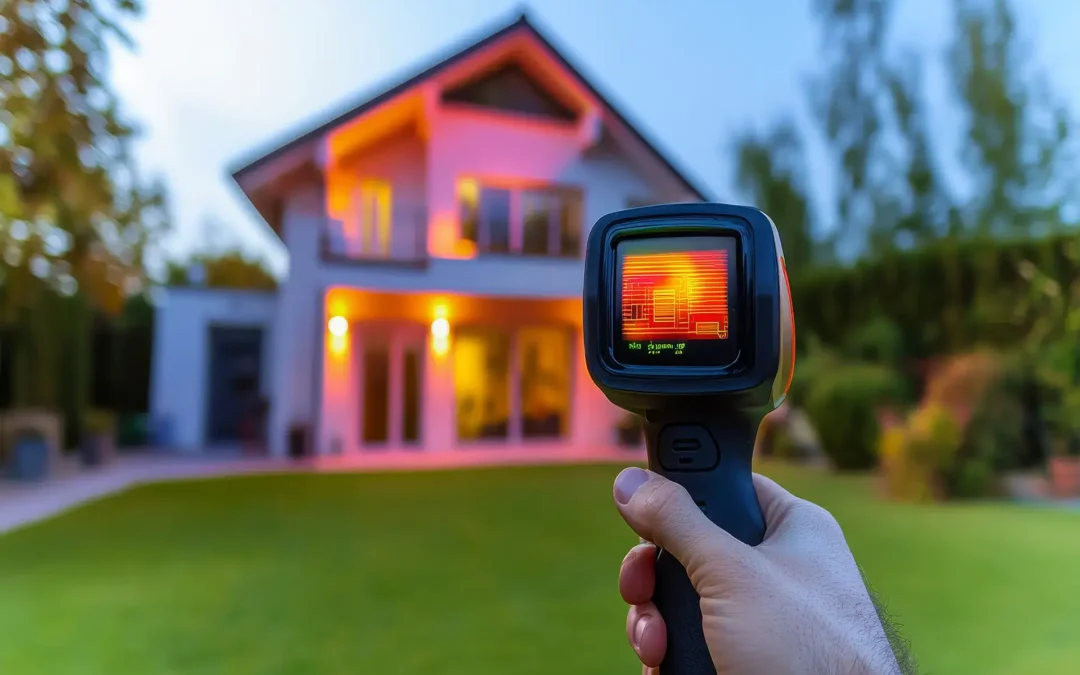
A blower door test is a diagnostic method used to measure how airtight a home is and identify where air is leaking in or out.
If your home feels drafty in the winter, humid in the summer, or your energy bills keep climbing for no clear reason, hidden air leaks may be part of the problem.
Many homes across Long Island and NYC lose conditioned air through small gaps around attics, basements, rim joists, windows, recessed lighting, and crawl spaces. Most homeowners do not notice these leaks until the house becomes uncomfortable or utility costs start getting out of control.
At Zavza Seal, we use blower door testing to pinpoint where air is escaping and where outside air is getting in. This helps homeowners understand how their home is performing and what improvements will actually make a difference. Instead of guessing, we can identify the areas causing drafts, uneven temperatures, and energy loss.
Older homes throughout Queens, Brooklyn, Nassau County, and Suffolk County are especially prone to leakage issues because many were built before modern air sealing standards existed. Even newer homes can have hidden gaps that affect comfort and efficiency.
In this guide, we’ll explain:
- what a blower door test is
- how blower door testing works
- signs your home may have air leakage
- what testing typically costs in New York
- how homeowners use these results to improve comfort and reduce energy waste
We’ll also share real examples from homes our team has worked on across Long Island and NYC.
What Is a Blower Door Test?
A blower door test is a diagnostic test used to measure how much air leaks in and out of a home.
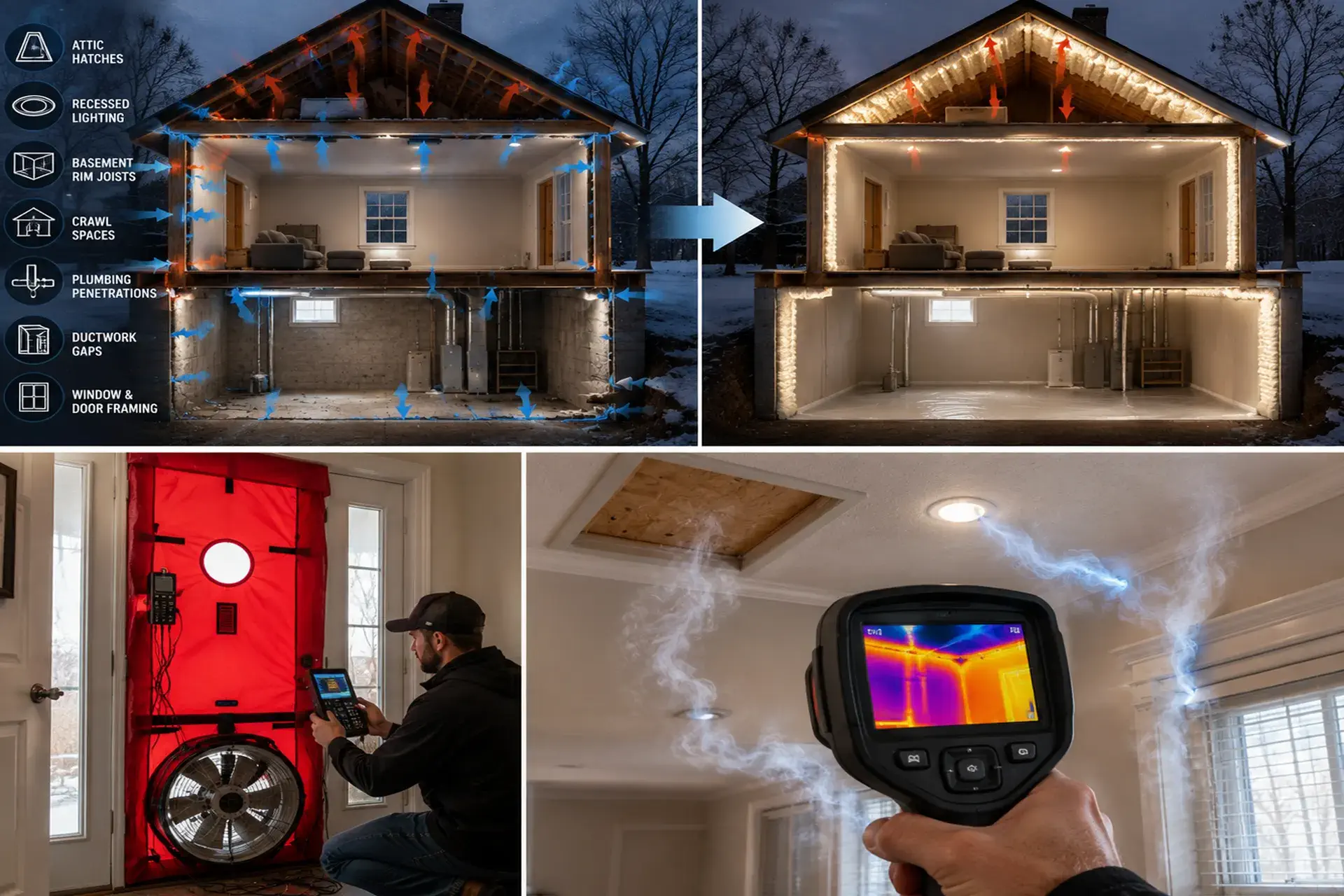
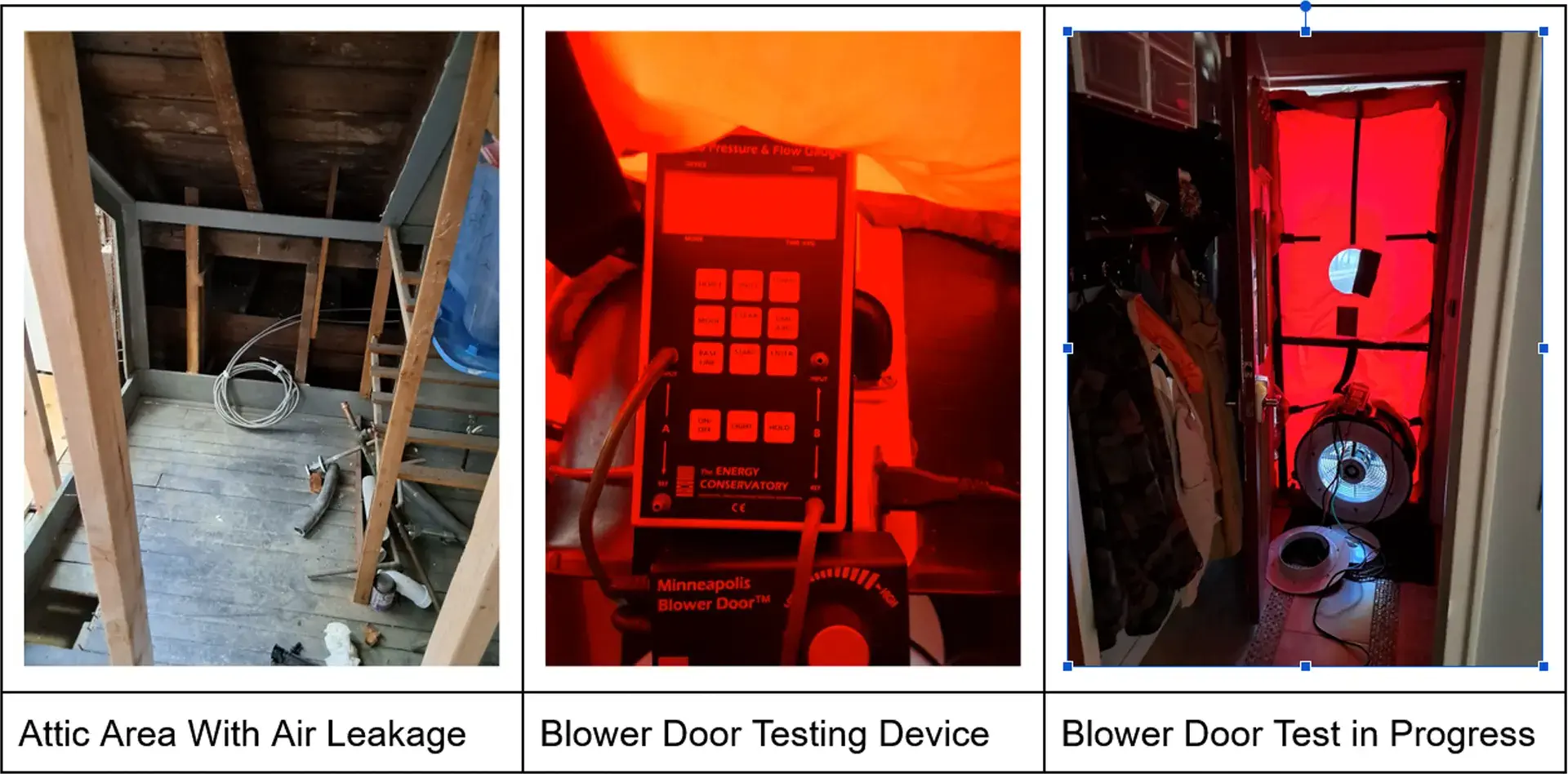
During the test, a powerful calibrated fan is temporarily mounted into an exterior doorway. The fan pulls air out of the house, which changes the air pressure inside. This pressure difference makes hidden leaks easier to locate.
As outside air gets pulled into the home through gaps and cracks, our technicians can identify problem areas using tools like:
- smoke pencils
- thermal imaging cameras
- airflow meters
- visual inspection techniques
Think of it like putting your home under a magnifying glass for air leakage.
Many homeowners are surprised to learn how much conditioned air escapes through areas they never notice, including:
- attic hatches
- recessed lighting
- basement rim joists
- crawl spaces
- plumbing penetrations
- ductwork gaps
- window and door framing
In Long Island homes especially, we often find significant leakage around attic floors and basement areas. During winter, warm air naturally rises and escapes through the upper levels of the house. This creates what is known as the “stack effect,” where cold outside air is pulled in through lower levels like basements and crawl spaces.
That constant air movement can lead to:
- cold floors
- drafty rooms
- uneven temperatures
- moisture problems
- higher heating and cooling costs
A blower door test helps identify exactly where these issues are coming from so homeowners can make targeted improvements instead of wasting money on guesswork.
For example, we recently worked on a home in Queens where the homeowner believed old windows were causing major drafts. After blower door testing, we discovered the biggest issue was actually unsealed attic penetrations and poorly insulated rim joists. Once those areas were properly air sealed and insulated, the home became noticeably more comfortable during the winter.
Blower door testing is also commonly used before:
- attic insulation upgrades
- spray foam insulation projects
- energy efficiency improvements
- crawl space encapsulation
- home performance upgrades
- renovation and remodeling work
Without proper testing, many homes end up adding insulation while leaving major air leakage pathways untreated.
Why Homes in New York Often Have Air Leakage Problems
Homes across Long Island and NYC go through a lot during the year. Cold winters, humid summers, heavy rain, and constant temperature changes all put stress on a home over time. As materials expand and contract, small gaps begin to form in different parts of the house. Many of these openings are hidden behind walls, inside attics, or around basement areas, so homeowners usually have no idea they exist.
Older homes in areas like Queens, Brooklyn, Huntington, and Nassau County are especially prone to air leakage problems. Many were built decades ago when homes were not air sealed the way they are today. Even when insulation is added later, hidden gaps often remain untreated.
One of the biggest problem areas we see during blower door testing is the attic. Warm air naturally rises, and during winter it escapes through openings in the upper parts of the home. Once that warm air leaves, cold outside air gets pulled in from lower levels like the basement or crawl space. This cycle can make the home feel uncomfortable no matter how high the heat is running.
We also commonly find leakage around:
- attic hatches
- recessed lights
- bathroom exhaust fans
- plumbing and electrical penetrations
- basement rim joists
- crawl spaces
- ductwork connections
In many Long Island homes, basement rim joists are a major source of drafts and energy loss. These areas are often poorly insulated or completely unsealed. Homeowners may notice cold floors during winter or rooms that never seem to stay comfortable.
Summer can create problems too. Humid outside air can enter through these same gaps, forcing air conditioning systems to work harder and making certain rooms feel sticky or damp. Over time, uncontrolled air leakage can also contribute to moisture buildup and indoor air quality issues.
We recently worked on a home in Suffolk County where the homeowner complained that the second floor was always hotter than the rest of the house during summer. After performing blower door testing, we found major leakage around attic penetrations and recessed lighting. Once those areas were air sealed and insulated properly, the temperature difference between floors improved noticeably.
Air leakage problems are very common in New York homes, but most homeowners do not realize how much comfort and energy they are losing until testing is done.
Signs Your Home May Need a Blower Door Test
Many homeowners live with air leakage problems for years without realizing what is causing them. They may assume the house is just old, or that high utility bills are normal during winter and summer. In reality, hidden leaks throughout the home are often a major part of the problem.
One of the most common signs that your home may need a blower door test is uneven temperatures between rooms. You may have one bedroom that always feels colder in winter or a second floor that becomes too hot during summer. This usually happens because conditioned air is escaping while outside air is getting in through hidden gaps.
Drafts are another clear warning sign. If you feel cold air near windows, doors, basement areas, or attic access points even when everything is closed, there is a good chance your home has leakage issues.
Many homeowners also notice that their heating or cooling system seems to run constantly. The HVAC system keeps trying to maintain the desired temperature, but air loss makes it harder for the home to stay comfortable.
Other common signs include:
- unusually high energy bills
- cold floors during winter
- rooms that feel stuffy or humid
- excessive indoor dust
- musty smells near crawl spaces or basements
- ice dams forming on the roof during winter
- allergy symptoms that worsen indoors
In some homes, the signs are more subtle. A room may simply never feel comfortable no matter how much insulation has been added. We often see this in homes where insulation was installed without first sealing the hidden leakage areas.
A blower door test helps remove the guesswork. Instead of assuming where the problem might be, testing allows us to locate the exact areas where air is moving in and out of the home. That information makes it much easier to recommend improvements that actually solve the issue rather than temporarily covering it up.
How Blower Door Testing Works
A blower door test may sound technical, but the process is actually very straightforward. The goal is simply to measure how much outside air is leaking into the home and identify where those leaks are happening.
During the test, our team installs a temporary frame with a powerful calibrated fan into one of the exterior doorways of the home. Once the system is set up, the fan pulls air out of the house to lower the indoor air pressure.
When this happens, outside air begins entering through hidden gaps and cracks throughout the structure. These leaks become much easier to detect because the pressure difference exaggerates the airflow.
As the test is running, we move through the home checking the areas where leakage commonly occurs. In many New York homes, we typically inspect:
- attic penetrations
- basement rim joists
- crawl spaces
- window and door framing
- recessed lighting
- utility openings
- ductwork areas
To locate leaks accurately, we may use smoke pencils, airflow detection tools, or thermal imaging cameras. Thermal imaging is especially helpful because it allows us to see temperature differences behind surfaces that are not visible to the eye.
Many homeowners are surprised during testing because some of the largest leaks come from areas they never suspected. We often find major air movement around attic floors, plumbing penetrations, and basement sill plates rather than the windows themselves.
The process itself is non-invasive and usually takes only a few hours depending on the size of the home. Homeowners can stay inside during the testing, and the equipment is removed once everything is complete.
After the test, we review the results and explain which areas are contributing most to the air leakage problem. This helps homeowners understand which improvements will have the biggest impact on comfort and energy efficiency.
Instead of replacing things unnecessarily, blower door testing helps focus attention on the areas that actually need to be sealed or insulated.
What a Blower Door Test Can Reveal
One of the biggest advantages of blower door testing is that it shows problems that are normally hidden behind walls, ceilings, attics, and basement areas. Without testing, many homeowners end up guessing where drafts and energy loss are coming from.
In some homes, the issue may be poorly sealed attic penetrations. In others, it could be basement rim joists, crawl spaces, or disconnected ductwork. Every house is different, which is why testing is so valuable before starting insulation or energy-efficiency upgrades.
A blower door test can reveal why certain rooms never feel comfortable even when the HVAC system is working properly. It can also explain why some homes have consistently high heating and cooling bills despite having decent insulation.
One common situation we see in Long Island homes is air leakage from the attic pulling conditioned air out of the living space. This creates pressure differences that bring cold outside air into the lower levels of the home during winter. Homeowners often describe this as “cold air coming from nowhere.”
Testing can also uncover moisture-related concerns. When humid outside air enters through hidden gaps during summer, it can contribute to condensation, musty smells, and damp conditions in areas like crawl spaces and basements. Over time, this moisture can affect insulation performance and indoor air quality.
In one Brooklyn home we worked on, the homeowner had already replaced windows and upgraded insulation but still struggled with uncomfortable drafts. During blower door testing, we discovered large leakage areas in that Brooklyn home around recessed lighting and plumbing penetrations in the attic. Once those areas were sealed, the home felt noticeably more stable and comfortable during colder weather.
Blower door testing also helps homeowners avoid spending money in the wrong places. Sometimes people assume they need all new windows or a larger HVAC system when the real issue is uncontrolled air leakage throughout the home.
By identifying the actual source of the problem, homeowners can make smarter improvements that lead to better comfort, lower energy waste, and more consistent indoor temperatures year-round.
How Much Does Blower Door Testing Cost in NYC and Long Island?
The cost of a blower door test in NYC and Long Island can vary depending on several factors, including the size of the home, accessibility of attic and basement areas, and whether the testing is being done as part of a larger insulation or energy-efficiency project.
For most residential homes, blower door testing typically ranges from a few hundred dollars for standalone testing to higher costs for larger homes or detailed energy performance evaluations. Homes with multiple leakage areas, finished attics, crawl spaces, or complex layouts may require more detailed inspection time.
Several factors can affect pricing, including:
- square footage of the home
- age of the property
- number of floors
- attic and crawl space accessibility
- whether thermal imaging is included
- pre- and post-insulation testing requirements
- code compliance documentation needs
In many cases, homeowners save money long-term because blower door testing helps avoid unnecessary upgrades and identifies the exact areas causing drafts and energy loss.
For a full breakdown of blower door testing pricing, what affects the cost, and what homeowners should expect during the process, read our detailed guide
Real Project Example: Blower Door Testing + Air Sealing (Queens, NY)
We recently completed a blower door testing project in Queens, NY where the homeowner was dealing with drafts, uneven temperatures, and high heating costs even after adding insulation.
At first, the homeowner believed the issue was old windows. However, blower door testing showed the real problem was hidden air leakage in other parts of the home.
What We Found
The test revealed major air leaks in the attic and basement areas, including unsealed attic penetrations, gaps around recessed lighting, and leakage at the rim joists. These were the main sources of cold air entering the home and warm air escaping.
What We Did
Instead of replacing windows or adding more insulation randomly, we focused on sealing the actual problem areas. We air sealed attic gaps, insulated rim joists, and closed multiple small leakage points identified during the test.
After the work was completed, the homeowner experienced noticeably fewer drafts, more balanced temperatures between floors, and improved overall comfort during winter. The heating system also ran more efficiently because less conditioned air was being lost.
This project shows why blower door testing is so important. It helps identify the real source of air leakage so improvements are targeted, not guessed.
Blower Door Testing Before Insulation Projects
Blower door testing before insulation work is one of the most important steps in improving a home’s energy efficiency. It helps identify where air is leaking before new insulation is installed, so the real problem areas can be addressed first instead of being hidden later.
When air leaks are not found early, insulation alone cannot fully solve comfort or energy issues. Air will still move through gaps, cracks, and unsealed areas, which reduces how effective the insulation can be.
Why testing before insulation matters
A blower door test done before insulation gives a clear picture of how much air is escaping from the home. This helps contractors understand where energy loss is happening the most, such as around attic openings, rim joists, windows, or wall penetrations.
Without this step, insulation work may be based on assumptions instead of real data. That can lead to missed problem areas and less effective results.
Why air sealing should happen first
Air sealing should always come before adding insulation because insulation works best in a controlled, sealed environment. If air is still moving freely through gaps, insulation cannot perform at its full potential.
By sealing leaks first, the home becomes tighter and more stable. This allows insulation to do its job properly, instead of being bypassed by moving air.
How testing improves insulation effectiveness
Blower door testing helps create a more strategic insulation plan. Instead of insulating everywhere equally, it shows exactly where improvements are needed most. This leads to better comfort, fewer drafts, and more consistent indoor temperatures.
It also improves long-term performance because sealed and insulated areas hold conditioned air more effectively, reducing strain on heating and cooling systems.
This process is especially important in older Long Island homes where hidden air leakage is common.
For best results, blower door testing is often paired with targeted insulation upgrades such as:
- cellulose insulation for dense cavity filling and sound reduction
- spray foam insulation for sealing and high-performance air barriers
- attic insulation to reduce major heat loss through the top of the home
Used together, testing and insulation create a complete energy efficiency system rather than isolated improvements.
Do You Need a Blower Door Test for Building Code Compliance?
A blower door test is often required when you are building, renovating, or improving the energy performance of a home. It helps confirm whether your home meets local energy code requirements by measuring how much air is leaking in or out.
In most cases, you may need a blower door test if you are working on:
- Renovations that affect insulation or exterior walls
- Home additions such as extra rooms or expanded living spaces
- New construction projects that must meet current energy codes
This test is commonly required by inspectors to ensure your home is not wasting energy through hidden air leaks. Even when it is not strictly required, many homeowners still choose it to avoid future problems with drafts, high energy bills, or failed inspections.
For homeowners, it is a simple step that helps confirm the home is properly sealed and energy efficient before final approval.
Why Long Island Homeowners Choose Zavza Seal
Homeowners across Long Island choose Zavza Seal because they want honest answers and long-term energy solutions.
Our blower door testing helps homeowners understand where air leaks are happening and how they affect comfort and energy bills. Instead of just providing numbers, we explain what the results mean and what improvements can help your home.
Homeowners trust Zavza Seal for:
- Experience working with Long Island homes
- Real project photos and case studies
- Honest recommendations without pressure
- Practical energy-saving solutions
- Certified technicians trained in air sealing and building performance
- Years of experience in insulation, waterproofing, and energy efficiency
Our goal is to help make your home more comfortable, energy efficient, and protected for the long term.
Frequently Asked Questions
How long does a blower door test take?
A blower door test usually takes about one to two hours, depending on the size of the home and how detailed the inspection is.
Is a blower door test worth it?
Yes, it is worth it because it helps identify hidden air leaks that can lead to higher energy bills, drafts, and discomfort in the home.
Can blower door testing lower energy bills?
Yes. By finding air leaks, it allows homeowners to seal problem areas, which can reduce heating and cooling costs over time.
What is considered a good blower door test result?
A good result depends on your home type and local energy codes, but generally, lower air leakage means better energy efficiency and comfort.
Will a blower door test find drafts?
Yes, it helps locate where drafts are coming from, even if they are not visible or easy to feel without testing equipment.
Do older homes in Long Island usually have air leakage?
Yes, many older homes in Long Island tend to have higher air leakage due to aging materials, settling, and outdated construction methods.
Is blower door testing required in New York?
In many new construction and renovation projects, blower door testing is required to meet New York State energy code compliance.
Should blower door testing be done before insulation?
Yes, it is often best to test before and after insulation so you can identify leaks first and then confirm improvements after sealing.