
Water around your home can lead to much bigger problems than a muddy yard. Over time, poor drainage can increase moisture around the foundation, create damp basements or crawl spaces, and even contribute to structural damage if it is not addressed. One of the most common questions homeowners ask is whether they need a drain tile system or a French drain. While the two are similar in some ways, they are designed to solve different drainage problems.
If you have been comparing drain tile vs French drain, you are not alone. The names are often used interchangeably, which makes it difficult to know which system is right for your property. Choosing the wrong solution may not solve the problem, leaving you with recurring water issues after every heavy rain.
In this guide, we will explain how each drainage system works, where it is typically installed, and the types of water problems it is designed to handle. By the end, you will have a clear understanding of which drainage system is best for your home based on your property’s drainage needs.
What Is a Drain Tile?
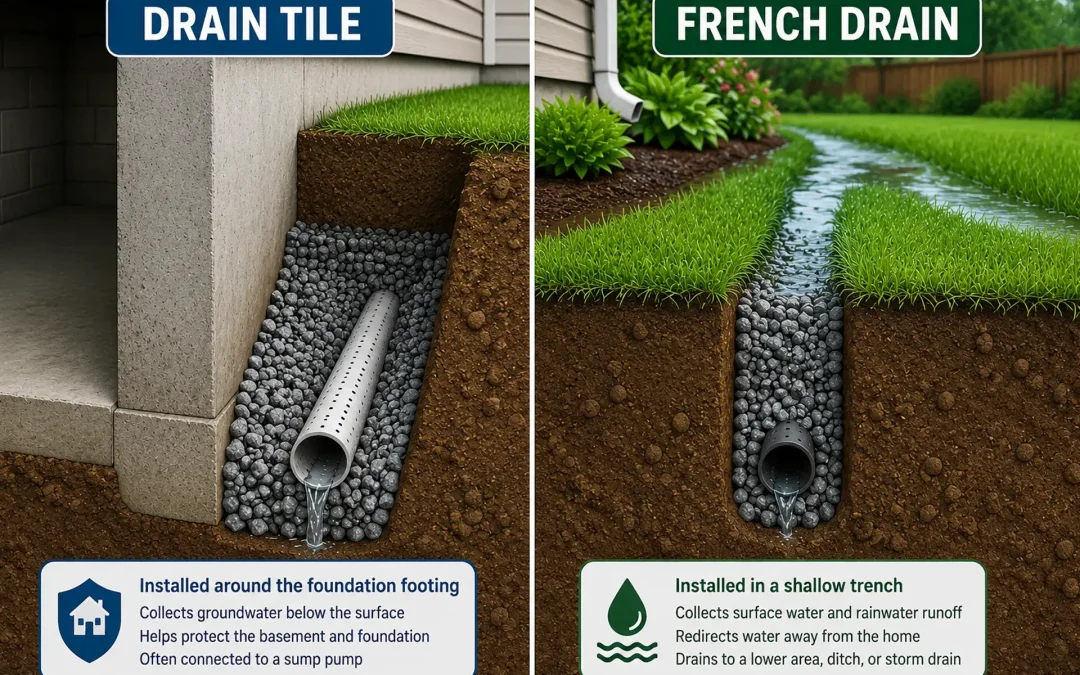
Despite its name, a drain tile does not contain any actual tiles. A modern drain tile system is made up of a perforated pipe that is installed around the footing of a home’s foundation. The pipe is surrounded by clean gravel, which allows groundwater to flow into the pipe instead of collecting against the foundation walls.
As water enters the pipe, it is carried away from the home or directed into a sump pump system, where it can be safely discharged away from the foundation. This helps reduce hydrostatic pressure, which is one of the leading causes of basement leaks and water seepage.
Drain tile systems are commonly installed during new home construction because the foundation is already exposed. However, they can also be added to existing homes through excavation around the exterior foundation or as part of an interior basement waterproofing system.
A drain tile system is often the right choice when the problem comes from groundwater rather than rainwater flowing across the surface. Homes with high water tables, persistent basement moisture, or recurring water seepage after storms often benefit from this type of drainage solution.
Some of the most common situations where a drain tile system is used include:
- Basement water seepage along the floor or wall joints
- Water collecting around the foundation after heavy rain
- Homes with a high groundwater level
- Interior waterproofing systems with a sump pump
- New construction projects that include foundation drainage
While a drain tile system works below ground to protect the foundation, it is only one part of a complete drainage plan. In many cases, it is combined with other waterproofing measures to keep water away from the home before it becomes a problem.
What Is a French Drain?
A French drain is a simple drainage system that collects water and moves it away from areas where it should not be. Like a drain tile system, it uses a perforated pipe surrounded by gravel. The main difference is where it is installed and the type of water it is designed to handle.
A French drain is usually placed in a shallow trench where water naturally collects. As rainwater or surface water flows into the gravel, it enters the pipe and is carried to a safe discharge point away from the home. This helps prevent water from pooling around the foundation, flooding the yard, or damaging landscaping.
French drains are commonly installed in places where water stays on the surface after rain. For example, they are often used along the side of a house, at the bottom of a slope, around patios, near driveways, or in low spots in the yard. They can also help reduce the amount of water reaching the foundation before it has a chance to soak into the soil.
A French drain may be a good solution if you are dealing with:
- Standing water in the yard after rain
- Water running toward your home’s foundation
- Poor drainage around patios or walkways
- Erosion caused by heavy rainfall
- Wet areas that make landscaping difficult to maintain
Although a French drain does an excellent job of managing surface water, it is not always enough to stop groundwater from pushing against basement walls. If water is entering the basement from below ground, a drain tile system or another waterproofing solution may also be needed.
Drain Tile vs French Drain: What Is the Difference?
At first glance, drain tile systems and French drains look very similar because both use perforated pipes and gravel to move water away. The biggest difference is the type of water they are designed to collect.
A drain tile system is built to manage groundwater around the foundation. It sits deeper in the ground, near the footing of the home, where it helps relieve water pressure before it reaches the basement or crawl space.
A French drain, on the other hand, is mainly designed to collect surface water. It is installed closer to the ground surface and helps redirect rainwater before it can pool around the property.
Here’s a quick comparison:
| Feature | Drain Tile | French Drain |
| Main purpose | Removes groundwater around the foundation | Redirects surface water and rainwater |
| Installation depth | Along the foundation footing | In a shallow trench near the surface |
| Common location | Around the basement or crawl space foundation | Yards, gardens, driveways, patios, and slopes |
| Best for | Basement leaks, hydrostatic pressure, foundation protection | Yard flooding, standing water, drainage around landscaping |
| Often used with | Sump pump and waterproofing systems | Downspout extensions or landscape drainage |
Neither system is automatically better than the other. The right choice depends on where the water is coming from.
If your basement leaks because groundwater is building up around the foundation, a drain tile system is usually the better solution. If rainwater collects in your yard or flows toward your house during storms, a French drain is often the more effective option.
In some homes, both systems work together. A French drain can keep surface water away from the foundation, while a drain tile system manages the groundwater below. Using both creates a more complete drainage system and helps protect the home from water damage throughout the year.
Which Drainage System Is Best for Your Home?
There is no single drainage system that works for every home. The best choice depends on where the water is coming from and how it is affecting your property. Before deciding between a drain tile system and a French drain, it is important to identify the source of the problem.
If water is entering your basement after heavy rain or you notice damp walls, a drain tile system is often the better solution. It is designed to collect groundwater before it can build up against the foundation and cause leaks.
If your yard stays soggy for days, water pools near your patio, or rainwater flows toward your home, a French drain is usually the right choice. It captures surface water and redirects it before it can create larger drainage issues.
Here are some common situations and the drainage system that is typically recommended:
| If your home has… | The better choice is… |
| Water leaking into the basement | Drain tile system |
| Standing water in the yard | French drain |
| Water collecting around the foundation | Depends on the source. Surface water may need a French drain, while groundwater often requires drain tile. |
| A crawl space with moisture problems | Drain tile system |
| A sloped yard that sends rainwater toward the house | French drain |
| A high water table | Drain tile system |
| Both basement leaks and yard flooding | A combination of both systems |
Many homeowners are surprised to learn that their drainage problem is caused by more than one issue. For example, surface water may collect around the home during storms, while groundwater also builds up around the foundation. In cases like these, installing only one drainage system may solve part of the problem but not all of it.
A professional inspection can help determine where the water is coming from and which solution will provide lasting protection.
Can You Install a Drain Tile and a French Drain Together?
Yes. In fact, many homes benefit from having both systems because they solve different problems.
Think of it this way. A French drain helps stop rainwater before it reaches your foundation. A drain tile system deals with the groundwater that is already surrounding the foundation below the surface. When both systems are working together, they provide more complete protection against water intrusion.
For example, imagine a home where the backyard slopes toward the foundation. Every time it rains, water flows across the yard and collects next to the house. Over time, some of that water soaks into the ground, increasing the pressure around the foundation walls.
In this situation, a French drain can intercept the rainwater and carry it away from the house. At the same time, a drain tile system can collect any groundwater that reaches the foundation and direct it to a sump pump or another safe discharge point.
Using both systems together can help:
- Reduce the risk of basement leaks
- Keep excess water away from the foundation
- Prevent standing water in the yard
- Lower hydrostatic pressure against foundation walls
- Improve the overall drainage around the property
Every property is different, so there is no one-size-fits-all solution. Factors such as the slope of the land, soil type, foundation design, and local drainage conditions all play a role in choosing the right system.
The goal is not simply to remove water after it becomes a problem. A well-designed drainage system helps control where water goes in the first place, reducing the chances of costly repairs in the future.
Signs Your Home May Need a Better Drainage System
Water problems rarely appear overnight. In many homes, the warning signs start small and become more serious over time. Catching these issues early can help prevent expensive repairs and protect your foundation.
Here are some common signs that your home’s drainage system may not be doing its job.
Water in the basement after heavy rain
If you notice water along the basement walls or where the floor meets the wall after a storm, there is a good chance that water is building up around the foundation. This often points to a drainage problem rather than a simple crack in the concrete.
Standing water in the yard
Puddles that remain for several days after rain usually mean water is not draining properly. Besides making your yard unusable, standing water can slowly soak into the soil and increase moisture around the foundation.
Damp or musty basement
A basement does not have to flood to have a drainage problem. If the space always feels damp or has a musty smell, excess moisture may be entering through the foundation walls or floor.
White stains on basement walls
A white, chalky substance on concrete or masonry walls is called efflorescence. It forms when water moves through the concrete and leaves mineral deposits behind as it dries. While the stains themselves are harmless, they are a clear sign that moisture is passing through the foundation.
Cracks in the foundation
Not every crack is caused by poor drainage, but too much water around the foundation can increase soil pressure and contribute to cracking over time. If new cracks appear along with water issues, it is worth having both problems evaluated.
Mold or mildew growth
Mold thrives in damp environments. If you notice mold on basement walls, stored items, or crawl space framing, excess moisture may be the root cause. Improving drainage is often an important step in preventing the problem from returning after cleanup.
If you notice one or more of these signs, it is a good idea to have your property’s drainage evaluated before the problem becomes more expensive to fix.
A Realistic Example: Choosing the Right Drainage Solution
Every home is different, which is why there is no one-size-fits-all answer when it comes to drainage.
Imagine a homeowner in Long Island, NY, who started noticing water in the basement after almost every heavy rain. At first, they thought the problem was a few small foundation cracks. After sealing the cracks, the water still came back.
During an inspection, it became clear that two different issues were contributing to the problem. Rainwater from the backyard was flowing toward the house because of the slope of the property. At the same time, groundwater was building up around the foundation and creating pressure against the basement walls.
Instead of relying on a single solution, a complete drainage plan was recommended. A French drain was installed to capture surface water before it reached the foundation, while a drain tile system was added around the footing to collect groundwater and direct it to a sump pump.
After the work was completed, the homeowner no longer experienced water entering the basement during heavy storms. Just as importantly, the soil around the foundation stayed much drier, reducing the risk of future moisture problems.
This example shows why choosing between a drain tile vs French drain is not always an either-or decision. The best drainage system is the one that addresses the actual source of the water. In some homes, that means installing one system. In others, combining both provides the most reliable long-term protection.
Final Thoughts
When comparing drain tile vs French drain, the most important thing to remember is that they are designed to solve different water problems.
A drain tile system protects your home from groundwater that builds up around the foundation. A French drain manages rainwater and surface runoff before it has a chance to collect near your house. In some cases, one system is all you need. In others, combining both provides the best long-term protection against water damage.
If your basement feels damp, water collects in your yard, or you have noticed signs of moisture around your foundation, it is worth addressing the problem sooner rather than later. Water issues rarely improve on their own, and delaying repairs can lead to more extensive damage over time.
Frequently Asked Questions
Is a drain tile the same as a French drain?
No. Although both systems use a perforated pipe and gravel to move water away, they are designed for different purposes. A drain tile system collects groundwater around the foundation, while a French drain captures surface water before it reaches your home.
Which drainage system is better for basement water?
If water is entering your basement because of groundwater pressure, a drain tile system is usually the better choice. It is installed near the foundation footing, where it collects water before it can seep through the basement walls or floor.
If the water is coming from rainwater flowing toward your home, a French drain may solve the problem by redirecting the water away from the foundation.
Can a French drain prevent basement flooding?
It can help, but it depends on what is causing the flooding.
A French drain is effective at keeping surface water away from your home. However, if groundwater is pushing against the foundation from below, you may also need a drain tile system, a sump pump, or another waterproofing solution.
How long do drain tile and French drain systems last?
When installed correctly with quality materials, both systems can last for decades. Their lifespan depends on factors such as soil conditions, maintenance, and whether the drainage pipe becomes clogged with sediment or tree roots.
Regular inspections and keeping the drainage outlet clear can help the system perform well for many years.
Can I install a drainage system myself?
Small French drains for landscaping projects may be suitable for experienced DIY homeowners. However, installing a drain tile system around a foundation is much more complex. It often involves excavation, proper grading, waterproofing, and ensuring the drainage pipe has the correct slope.
For foundation drainage problems, professional installation is usually the safest option because an incorrectly installed system may fail to solve the problem.
How do I know which drainage system my home needs?
The answer depends on where the water is coming from.
If water is pooling in your yard or flowing toward your house, a French drain may be enough. If water is entering your basement or crawl space because of groundwater around the foundation, a drain tile system is often the better solution.
A professional inspection can identify the source of the moisture and recommend the most effective drainage system for your property.