
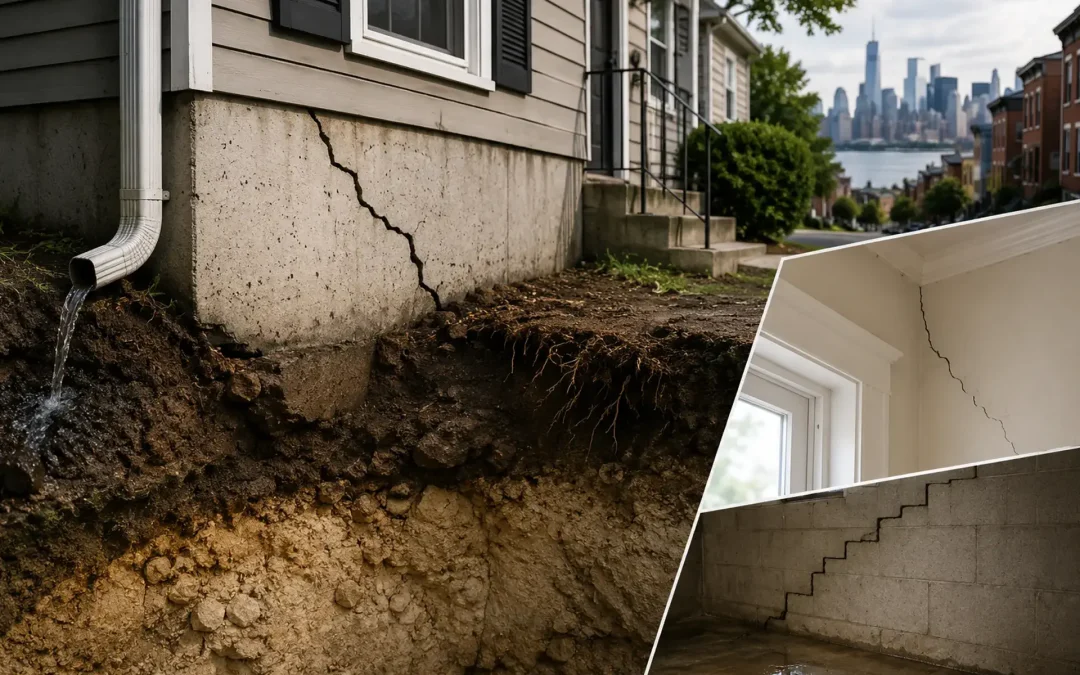
Your home is one of the biggest investments you will ever make, so it is natural to feel concerned when you notice cracks in the walls, uneven floors, or doors that suddenly do not close properly. Many homeowners immediately wonder if these are signs of house settling or something more serious.
The truth is that every home settles to some degree. As the ground beneath a home adjusts over time, the weight of the structure causes the soil to compress. This process is usually slow and expected. However, there are times when settling becomes uneven, leading to structural movement that should not be ignored.
Homes throughout Long Island, Brooklyn, Queens, and the Bronx experience different soil and weather conditions that can affect how a foundation performs over the years. Older homes may have foundations that have already experienced decades of seasonal movement, while newer homes can still develop settling issues if the soil was not properly compacted before construction. Heavy rain, poor drainage, plumbing leaks, and changing moisture levels in the soil can all play a role.
One of the first signs homeowners notice is settling cracks in house walls or ceilings. While some cracks are simply cosmetic, others can indicate that the foundation is moving more than it should. Knowing the difference can help you avoid unnecessary repairs while also preventing small problems from becoming expensive ones.
In this guide, we will explain what house settling is, why it happens, the different types of cracks to watch for, and when it is time to have your home inspected. Whether you own a home in Long Island, Brooklyn, Queens, or the Bronx, understanding the warning signs can help you protect your property’s value and your family’s safety.
What Is House Settling?
House settling is the natural process of a home slowly sinking or shifting as the soil beneath the foundation adjusts under its weight. This happens to almost every home, regardless of its age, size, or construction type.
Think of it this way. When a new home is built, the soil below the foundation carries thousands of pounds of weight. Over time, that soil compresses slightly, allowing the house to settle into a stable position. In many cases, this movement is small enough that homeowners never notice it.
Problems begin when the foundation does not settle evenly. Instead of moving down at the same rate, one area of the home may sink more than another. This uneven settle house movement places stress on walls, floors, ceilings, windows, and the foundation itself. As that stress builds, cracks and other signs of movement may begin to appear.
It is also important to understand that house settling is not limited to new homes. Older homes throughout Long Island, Brooklyn, Queens, and the Bronx can also experience new settlement when soil conditions change. Extended periods of heavy rainfall can soften the ground, while drought can cause certain soils to shrink. Poor drainage around the foundation, leaking underground pipes, tree roots removing moisture from the soil, and freeze-thaw cycles during winter can all contribute to foundation movement.
Not every crack means your foundation is failing. Small hairline cracks in drywall are often a normal part of a home’s aging process. However, wider cracks that continue to grow, stair-step cracks in brick or masonry, sloping floors, or doors and windows that suddenly stick may point to a larger foundation issue that deserves professional attention.
A thorough inspection is the best way to determine whether the movement is simply normal settling or a sign of an underlying structural problem. Experienced foundation specialists do more than look at cracks. They examine drainage, grading, soil conditions, moisture around the home, and the overall condition of the foundation before recommending any repairs. This helps homeowners avoid unnecessary work while making sure real structural issues are addressed before they become more costly.
At Zavza Seal, we encourage homeowners to monitor any new cracks by taking clear photos and noting the date they first appear. If a crack becomes noticeably wider, longer, or is accompanied by other symptoms such as uneven floors or water entering the basement, it is a good time to schedule a professional inspection. Catching foundation movement early often leads to simpler and more affordable repairs than waiting until the damage becomes severe.
What Causes House Settling in Long Island, Brooklyn, Queens, and the Bronx?
Many homeowners assume that a foundation problem means the house was built incorrectly. While poor construction can contribute to foundation issues, it is far from the only reason. In reality, several factors can affect how a home settles over time, especially in areas like Long Island, Brooklyn, Queens, and the Bronx where soil conditions and weather can vary from one neighborhood to another.
Clay Soil Expands and Shrinks
Clay-rich soil changes size as its moisture level changes. After heavy rain, it absorbs water and expands. During long dry periods, it loses moisture and shrinks. This constant cycle can cause the foundation to move slightly over time.
If one part of the foundation sits on wetter soil than another, the movement may become uneven. That is when cracks and other structural signs may begin to appear.
Sandy Soil Can Shift More Easily
Many parts of Long Island have sandy soil. Unlike clay, sand drains water quickly, which helps reduce expansion. However, it can also wash away or shift if water is not directed away from the home properly.
When soil beneath a foundation erodes or becomes loose, sections of the house may settle more than others. Good drainage is one of the best ways to help reduce this risk.
Heavy Rainfall and Changing Weather
New York experiences all four seasons, and changing weather affects the ground beneath your home. Heavy rainfall can soften the soil, while freezing and thawing during winter can gradually change how the soil supports the foundation.
Although seasonal movement is normal, repeated cycles over many years can contribute to foundation settlement.
Poor Drainage Around the Foundation
One of the most common causes of foundation movement is poor water management.
Water that collects next to the foundation can weaken the soil over time. Common drainage problems include clogged gutters, downspouts that empty too close to the home, poor yard grading, and areas where rainwater pools after storms.
These issues are often easier and less expensive to fix than repairing foundation damage later.
Older Homes
Brooklyn, Queens, and the Bronx have many beautiful older homes that have stood for decades. While these homes were built to last, years of changing soil conditions, weather, and aging building materials can eventually affect their foundations.
Even newer homes are not immune. If the soil beneath a new foundation was not properly compacted before construction, settlement can occur within the first several years.
The important thing to remember is that house settling usually develops slowly. Watching for changes over time is often more helpful than focusing on a single crack that has not changed in years.
Are Settling Cracks in House Walls Normal?
Finding settling cracks in house walls can be alarming, but not every crack is a sign of a serious structural problem. Some cracks are simply part of a home’s natural aging process, while others deserve closer attention.
The biggest question is not whether a crack exists. It is whether that crack is changing.
Small hairline cracks in drywall, especially above doors and windows or where walls meet the ceiling, are often considered cosmetic. They may appear after a home settles naturally or after seasonal changes cause building materials to expand and contract. These cracks are usually thin and remain the same size for years.
However, homeowners should pay closer attention if cracks continue to grow or if they appear together with other warning signs.
For example, you should consider having your home inspected if you notice:
- Cracks that become wider over time.
- Stair-step cracks in brick or block walls.
- Large diagonal cracks extending from windows or doors.
- Doors or windows that suddenly stick or no longer close properly.
- Uneven or sloping floors.
- Gaps developing between walls, ceilings, or trim.
These symptoms may indicate that the foundation is moving unevenly rather than experiencing normal settlement.
One simple way to monitor a crack is to take a clear photo with your phone and measure its width using a ruler. Check it again every few months. If the crack has not changed, it may simply be cosmetic. If it becomes noticeably wider or longer, or new cracks begin appearing nearby, it is worth having a foundation professional evaluate the home.
At Zavza Seal, we believe homeowners should never feel pressured into repairs based on a single crack alone. A proper inspection looks at the entire picture, including drainage around the home, foundation condition, floor levels, soil moisture, and the pattern of the cracks. This approach helps determine whether the issue is normal settlement or a structural concern that should be addressed before it leads to more extensive damage.
Common Cracks From House Settling
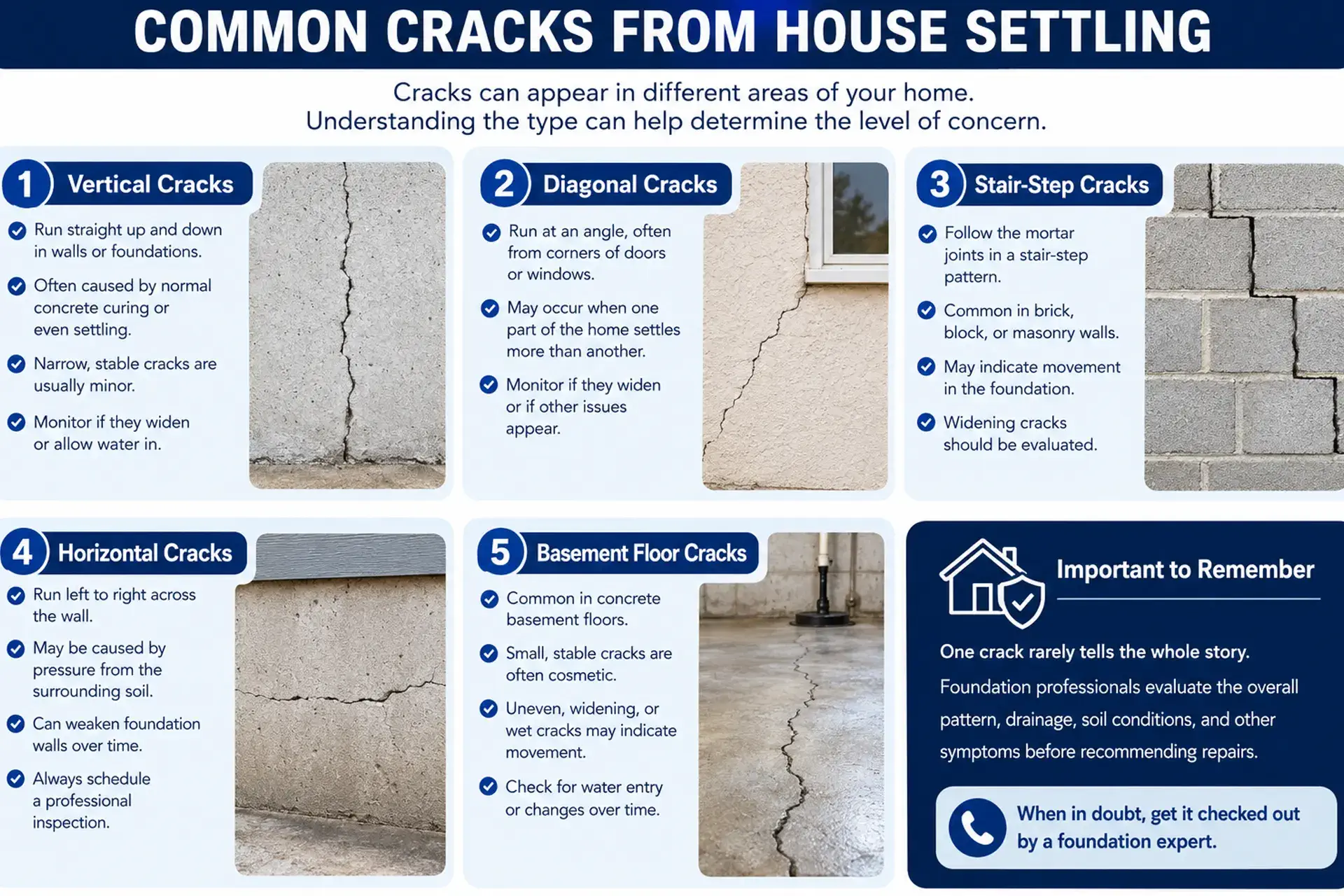
Not all cracks from house settling mean your home has a major structural problem. The location, direction, width, and whether the crack continues to grow all help determine how serious it may be.
Understanding the most common types of cracks can help you know when to simply monitor the situation and when to call a professional.
Vertical Cracks
Vertical cracks are one of the most common types of foundation or wall cracks. They often develop as concrete naturally shrinks during the curing process or as a home settles evenly over time.
If these cracks are narrow and do not become wider, they are often considered less concerning. However, if water begins entering through the crack or it continues to grow, it should be inspected.
Diagonal Cracks
Diagonal cracks usually appear at an angle, often extending from the corners of windows and doors. These cracks may develop when one section of the home settles more than another.
Small diagonal cracks are not always a sign of serious damage, but they should be monitored. If they become noticeably wider or appear together with sticking doors or uneven floors, they may indicate uneven foundation settlement.
Stair-Step Cracks
Stair-step cracks are commonly found in brick, concrete block, or masonry walls. Instead of running straight, they follow the mortar joints in a stair-step pattern.
These cracks often suggest that part of the foundation is moving differently than the rest of the structure. While some stair-step cracks remain stable for years, widening cracks should always be professionally evaluated.
Horizontal Cracks
Horizontal cracks deserve more attention than most other crack types.
When a foundation wall develops horizontal cracking, it may be experiencing pressure from the surrounding soil. This pressure can increase after periods of heavy rainfall or when drainage around the home is poor.
Because horizontal cracks can sometimes affect the strength of the foundation wall, homeowners should schedule an inspection rather than simply patching the crack.
Basement Floor Cracks
Concrete basement floors often develop small cracks as they cure and age. Many of these are cosmetic and do not affect the home’s structure.
However, if floor cracks become uneven, continue widening, or allow water to enter the basement, they may indicate movement beneath the slab or changes in the supporting soil.
Looking at one crack by itself rarely tells the whole story. Foundation professionals evaluate the overall pattern of cracks, the condition of the foundation, drainage around the property, and any additional symptoms before determining whether repairs are needed.
When Settling House Cracks Become a Foundation Problem
Many homeowners ask the same question: “How do I know if my settling house cracks are normal or something more serious?”
The answer usually depends on whether the movement has stopped or is continuing.
A small crack that has remained the same size for several years is often much less concerning than a crack that becomes larger every few months. Active movement is one of the strongest signs that your foundation may need professional attention.
You should consider scheduling an inspection if you notice several warning signs at the same time.
These may include:
- Cracks that continue to widen.
- Multiple cracks appearing throughout the home.
- Doors and windows that suddenly become difficult to open or close.
- Floors that feel uneven or begin to slope.
- Gaps forming between walls and ceilings.
- Water entering through foundation cracks.
- Basement walls that appear to lean or bow inward.
These symptoms do not always mean major structural damage has occurred, but they do indicate that the home should be evaluated before the problem becomes worse.
One mistake homeowners often make is repairing the visible crack without addressing the reason it formed. Filling a crack with caulk or patching compound may improve its appearance, but if the foundation is still moving, the crack will often return.
That is why experienced foundation contractors first identify the cause of the movement before recommending repairs. In some cases, improving drainage around the home may be enough to stabilize the soil. In others, foundation stabilization or waterproofing may be necessary to prevent additional movement.
At Zavza Seal, every inspection begins with understanding the entire home rather than focusing on a single crack. We evaluate drainage, grading, foundation walls, moisture conditions, and settlement patterns to determine whether the movement is active or has already stabilized. This allows homeowners to make informed decisions based on the actual condition of their property instead of unnecessary guesswork.
The earlier a foundation issue is identified, the more repair options are usually available. Addressing settlement early can often help prevent larger structural repairs and protect the long-term value of your home.
How Professionals Check Settle House Movement?
If you notice new cracks or other signs of movement, you may wonder what happens during a professional foundation inspection. Many homeowners expect someone to simply look at the cracks and provide an estimate. In reality, a thorough inspection is much more detailed.
Professionals evaluate the entire home because settle house movement can have more than one cause. Looking at the complete picture helps determine whether the movement is active, whether it has already stabilized, and what repairs, if any, are actually needed.
A typical inspection includes checking the foundation walls for cracks, measuring any visible openings, and looking for signs that the cracks have changed over time. Floors are checked for uneven areas, and doors and windows are tested to see if they open and close properly.
Drainage is another important part of the inspection. Water is one of the biggest factors that affects soil beneath a foundation. Gutters, downspouts, grading, and areas where water collects around the home are carefully evaluated because poor drainage often contributes to foundation movement.
The surrounding soil also provides valuable information. Soft soil, erosion, standing water, or areas where the ground has settled can all help explain why part of a home has shifted.
Instead of recommending repairs immediately, experienced contractors first determine the source of the problem. For example, if a crack developed because water has been collecting next to the foundation for years, improving drainage may help prevent additional movement. Simply repairing the crack without correcting the water issue would not solve the underlying problem.
At Zavza Seal, our inspections focus on understanding why movement is occurring before recommending a solution. This approach helps homeowners avoid unnecessary repairs while making sure genuine structural concerns are addressed before they become more expensive.
Why Homes in Long Island, Brooklyn, Queens, and the Bronx Experience Different Settlement Problems?
Although house settling can happen anywhere, the reasons behind it are not always the same. Soil conditions, the age of the home, drainage, and local weather patterns all influence how a foundation performs over time.
Understanding these regional differences helps homeowners recognize why one solution may not work for every property.
Long Island Homes
Many homes on Long Island are built on sandy soil. Sandy soil drains water better than clay, but it can also shift if water washes soil away from beneath the foundation.
Some areas also have higher groundwater levels, especially closer to the coast. If drainage around the home is poor, excess moisture can gradually affect the soil supporting the foundation.
Brooklyn Homes
Brooklyn has many older homes with masonry foundations that have been exposed to decades of seasonal weather changes. While these homes were built to last, years of soil movement, aging mortar, and changing drainage conditions can eventually contribute to settlement.
In densely developed neighborhoods, limited yard space can also make it more difficult for water to drain away from the foundation.
Queens Homes
Queens includes a wide variety of neighborhoods with different soil types and homes built during different time periods. Some properties experience settlement because of changing soil moisture, while others are affected by aging drainage systems or older foundations.
Because conditions vary from one neighborhood to another, every property should be evaluated individually rather than assuming all homes have the same problem.
Bronx Homes
Many homes in the Bronx have experienced decades of seasonal freezing and thawing. As water freezes, expands, and melts, the surrounding soil can slowly change over time. Combined with older construction and natural aging, these conditions may contribute to foundation movement.
Like other areas, drainage remains one of the most important factors in maintaining a stable foundation.
No matter where your home is located, the warning signs are generally the same. Expanding cracks, uneven floors, sticking doors, and water entering the basement should never be ignored.
While every home settles differently, early inspections can often identify small issues before they develop into major structural repairs. Understanding your home’s specific conditions is the first step toward choosing the right solution and protecting your investment for years to come.
A Realistic Example of House Settling
Imagine a homeowner in Queens who began noticing small cracks above the living room windows and a door that had become harder to close over the course of several months. At first, the cracks seemed minor, so they were patched and painted. A few months later, the same cracks returned, and new ones appeared near the ceiling.
Concerned that the problem was getting worse, the homeowner scheduled a foundation inspection.
During the inspection, the contractor found that the foundation itself had not suffered major structural damage. Instead, poor drainage around one side of the home was allowing rainwater to collect next to the foundation. Over time, the soil became saturated and settled unevenly, causing one section of the house to move slightly more than the rest.
To correct the problem, the drainage around the home was improved by extending the downspouts farther away from the foundation and regrading the soil so water would flow away from the house. Minor foundation cracks were repaired, and the homeowner was advised to continue monitoring the existing cracks over the following months.
At the follow-up inspection, no additional movement had been observed, and the repaired cracks remained stable.
While every home is different, this example shows why it is important to identify the cause of settlement before making repairs. In many cases, correcting drainage problems early can help prevent more extensive foundation repairs in the future.
Can House Settling Be Prevented?
Although no homeowner can completely stop a house from settling, there are several steps that can help reduce the risk of excessive foundation movement.
The most important step is controlling water around your home. Too much water can soften the soil beneath the foundation, while long periods of dry weather can cause certain soils to shrink. Keeping soil moisture as consistent as possible helps the foundation remain more stable.
Simple maintenance can make a big difference over time.
Keep gutters clean so rainwater flows properly instead of overflowing next to the foundation. Make sure downspouts discharge water several feet away from the house rather than directly beside the foundation. If water regularly pools in your yard after rain, improving the grading or installing a drainage system may help direct water away from the home.
It is also a good idea to inspect your home a few times each year. Walk around both the inside and outside of the house, looking for new cracks, sticking doors or windows, uneven floors, or signs of water entering the basement or crawl space.
If you notice a crack, do not panic. Instead, take a clear photo, measure its width, and check it again after a few months. Many cracks remain unchanged and are simply part of normal house settling. Others gradually become larger, which may indicate ongoing foundation movement.
Routine maintenance is often much less expensive than major structural repairs. Addressing drainage problems, repairing plumbing leaks, and monitoring changes early can help homeowners protect both their foundation and the long-term value of their property.
If you are unsure whether the movement you are seeing is normal, a professional inspection can provide peace of mind. Sometimes the best outcome is learning that your home is settling normally. If repairs are needed, identifying the issue early usually gives homeowners more options and helps prevent additional damage.
Protect Your Home by Addressing House Settling Early
Most homes experience some degree of settling during their lifetime, and many small cracks are simply part of the natural aging process. The key is learning to recognize the difference between normal settlement and signs that may point to a developing foundation problem.
Watching for expanding cracks, uneven floors, sticking doors or windows, and drainage issues around your home can help you identify potential problems before they become more serious. Early inspections often provide homeowners with more repair options and may help prevent costly structural damage in the future.
Whether you own a home in Long Island, Brooklyn, Queens, or the Bronx, understanding how house settling affects your property is the first step toward protecting your investment. Every home is different, which is why a complete inspection should consider the condition of the foundation, drainage, soil, and the overall pattern of movement instead of focusing on a single crack.
If you have noticed changes in your home and are unsure whether they are part of normal settling or a sign of foundation movement, the experienced team at Zavza Seal can evaluate your property and recommend solutions based on its specific conditions. Our goal is to help homeowners make informed decisions by identifying the cause of the problem and recommending repairs only when they are truly needed.
Frequently Asked Questions
Is house settling normal?
Yes. Some house settling is completely normal and happens as the soil beneath a home’s foundation adjusts to the weight of the structure. Most homes experience some degree of settling over time. The concern begins when the settlement becomes uneven or continues to worsen, leading to structural problems.
How much house settling is acceptable?
There is no single amount of settlement that applies to every home. What matters most is whether the movement has stabilized. Small cosmetic cracks that remain unchanged for years are often normal. However, if cracks continue to widen or new symptoms develop, the home should be inspected.
Can settling cracks in house walls be repaired?
Yes. Many settling cracks in house walls can be repaired once the cause of the movement has been identified. If the foundation has stabilized, repairing the cracks may be all that is needed. If the home is still moving, the underlying issue should be addressed first to help prevent the cracks from returning.
Do cracks from house settling get worse?
Some cracks from house settling remain the same size for many years, while others continue to grow. Cracks that become wider, longer, or appear alongside sticking doors, uneven floors, or water intrusion should be professionally evaluated.
When should I worry about settling house cracks?
You should pay closer attention if settling house cracks are growing over time, if multiple cracks appear throughout the home, or if they are accompanied by uneven floors, sticking windows and doors, or basement water problems. These signs may indicate ongoing foundation movement rather than normal settlement.
Can poor drainage cause house settling?
Yes. Poor drainage is one of the most common causes of foundation movement. Water collecting around the foundation can soften the supporting soil, leading to uneven settlement. Keeping water away from your home’s foundation is one of the best ways to help reduce this risk.
Does homeowners insurance cover house settling?
In many cases, standard homeowners insurance does not cover damage caused by normal settling or gradual foundation movement. However, coverage may be available if the damage results from a covered event, such as certain plumbing leaks or other sudden incidents. Because every insurance policy is different, homeowners should review their policy or speak with their insurance provider for specific information.
Should I repair the cracks or fix the foundation first?
It depends on what caused the cracks. If the foundation is still moving, repairing the cracks alone is usually a temporary solution because new cracks may appear later. A professional inspection can determine whether the foundation has stabilized or whether repairs should address the underlying cause first.