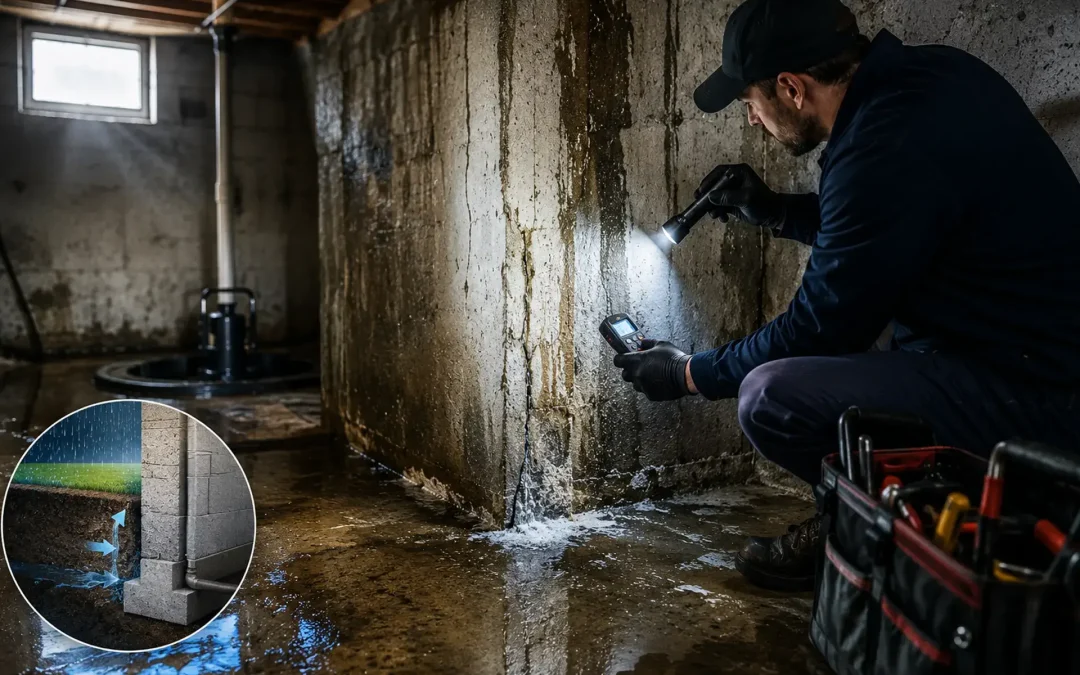
Heavy rainfall can be a blessing for landscapes, gardens, and reservoirs, but for homeowners, it often brings a different kind of challenge. When rain falls relentlessly for days or weeks, homes become vulnerable to water intrusion, foundation deterioration, mold growth, and structural damage. Even a small leak can turn into a major problem if left untreated.
This is where professional waterproofing specialists play a critical role. By identifying weak points, improving drainage systems, and implementing moisture-control measures, waterproofing experts help homeowners minimize the risks associated with prolonged rainfall.
For homeowners researching solutions from waterproofing contractors brooklyn, understanding how these professionals protect residential structures can provide valuable insight into preventative home maintenance. Companies such as Zavza Seal LLC often emphasize that effective waterproofing is not just about stopping leaks it’s about preserving the long-term health of a property.
Impact of Heavy Rainfall on Homes
Heavy rain creates pressure on every part of a home’s exterior. Roofs, foundations, walls, crawl spaces, and basements are constantly exposed to moisture during extended storms.
Why Rainwater Becomes a Serious Threat
Water naturally follows the path of least resistance. If there is even a tiny crack in a foundation wall or a gap around a window, rainwater can find its way inside.
Over time, repeated exposure to moisture may lead to:
- Foundation settlement
- Wood rot
- Mold growth
- Interior water stains
- Basement flooding
- Damaged insulation
The danger often develops slowly, making early intervention essential.
Common Areas Vulnerable to Water Intrusion
Several parts of a home are particularly susceptible during rainy seasons:
- Basement walls
- Foundation joints
- Crawl spaces
- Exterior wall penetrations
- Roof valleys
- Window wells
- Utility entry points
Each of these locations requires specific waterproofing strategies to remain protected.
The Role of Waterproofing Contractors in Home Protection
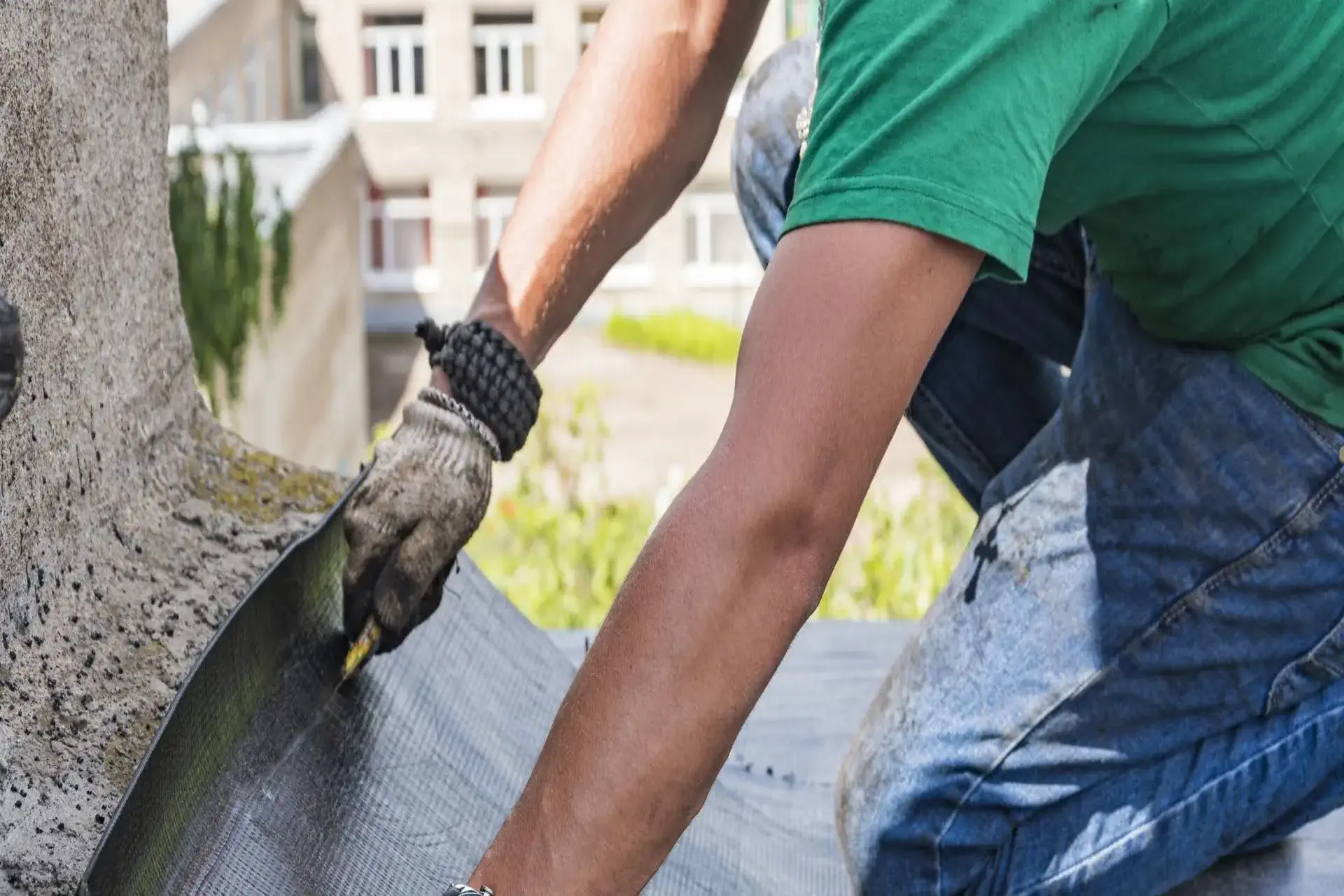
Waterproofing contractors specialize in identifying potential water-entry points and implementing preventative measures before serious damage occurs.
Assessing Moisture Risks Before Problems Escalate
One of the first tasks professionals perform is a detailed inspection. This evaluation identifies:
- Existing cracks
- Drainage deficiencies
- Soil grading issues
- Moisture accumulation zones
- Signs of hidden water damage
This proactive approach helps homeowners address problems before they become costly repairs.
Creating Long-Term Water Management Solutions
Waterproofing is not simply about applying sealants. Effective protection often requires a comprehensive system that manages water movement around and away from the home.
Professionals evaluate how rainwater interacts with the structure and recommend improvements designed to reduce moisture exposure year-round.
How Foundation Waterproofing Prevents Structural Damage
A home’s foundation serves as its structural backbone. During heavy rainfall, saturated soil places significant hydrostatic pressure against foundation walls.
Foundation Cracks and Water Penetration
As pressure increases, even minor cracks can become pathways for water intrusion.
Repeated wetting and drying cycles may contribute to:
- Crack expansion
- Concrete deterioration
- Foundation shifting
- Settlement problems
Waterproofing systems create barriers that reduce the likelihood of water entering these vulnerable areas.
Early Warning Signs Homeowners Should Watch For
Homeowners should pay attention to:
- Hairline cracks
- Damp basement walls
- Efflorescence deposits
- Musty odors
- Peeling paint
- Uneven floors
These signs often indicate underlying moisture concerns.
Basement Waterproofing During Rainy Seasons
Basements are among the most commonly affected areas during periods of prolonged rainfall.
Why Basements Are Most Vulnerable
Because basements are below ground level, they remain surrounded by soil that absorbs rainwater. When the ground becomes saturated, water pressure builds against basement walls.
Without proper waterproofing, water may seep through:
- Concrete pores
- Mortar joints
- Foundation cracks
- Floor-wall intersections
Interior and Exterior Waterproofing Strategies
Professional contractors may recommend:
- Exterior waterproof membranes
- Interior drainage channels
- Vapor barriers
- Crack injection systems
- Waterproof coatings
According to information discussed in a related article about interior foundation waterproofing, controlling basement moisture can significantly reduce mold risks and improve indoor air quality.
Drainage Systems and Their Importance
Proper drainage is often the most important component of any waterproofing strategy.
French Drains and Water Diversion
French drains help redirect groundwater away from the home’s foundation.
These systems:
- Reduce hydrostatic pressure
- Prevent standing water
- Improve soil drainage
- Protect foundation walls
By moving water away from vulnerable areas, French drains help reduce the likelihood of flooding and seepage.
Sump Pumps During Heavy Rainfall
Sump pumps act as a home’s emergency water removal system.
When groundwater levels rise, the pump automatically activates and removes excess water before flooding occurs.
For homes located in areas prone to heavy storms, sump pump systems can provide an additional layer of protection.
Roof and Exterior Wall Protection
While foundations often receive the most attention, roofs and walls are equally important when it comes to moisture protection.
Preventing Water Entry Through Building Envelopes
The building envelope includes all exterior surfaces that separate indoor spaces from outdoor weather conditions.
Waterproofing professionals inspect:
- Flashing systems
- Exterior wall joints
- Roofing transitions
- Window perimeters
- Expansion joints
Maintaining these components helps prevent hidden moisture infiltration.
Crawl Space Waterproofing and Moisture Control
Crawl spaces are frequently overlooked, yet they can contribute significantly to indoor moisture problems.
Managing Humidity and Mold Risks
Rainwater can raise humidity levels inside crawl spaces even when standing water is not visible.
Waterproofing strategies often include:
- Vapor barriers
- Encapsulation systems
- Drainage improvements
- Dehumidification measures
A related educational resource discussing crawl space encapsulation highlights how moisture control can improve air quality while reducing mold and structural concerns.
Mold Prevention Through Waterproofing
Moisture and mold have a direct relationship.
The Connection Between Moisture and Mold Growth
Mold spores exist naturally in most environments. However, they require moisture to grow and spread.
Heavy rainfall creates ideal conditions for mold when water enters:
- Basements
- Crawl spaces
- Wall cavities
- Attics
Waterproofing minimizes the moisture conditions that mold depends upon, helping create a healthier indoor environment.
Seasonal Maintenance Performed by Waterproofing Experts
Preventative maintenance remains one of the most effective ways to avoid water-related damage.
Inspections Before Storm Season
Waterproofing specialists often inspect:
- Foundation walls
- Drainage systems
- Sump pumps
- Crawl spaces
- Basement interiors
These inspections help identify vulnerabilities before major storms arrive.
Routine maintenance may also include clearing drainage systems, sealing new cracks, and evaluating grading conditions around the property.
Benefits of Professional Waterproofing Solutions
Waterproofing offers advantages that extend beyond leak prevention.
Long-Term Property Protection
A well-protected home may benefit from:
- Reduced structural deterioration
- Improved indoor air quality
- Lower mold risk
- Enhanced durability
- Greater resilience during storms
Professional solutions focus on long-term moisture management rather than temporary fixes.
Homeowners searching for reliable information about waterproofing contractors in brooklyn often discover that comprehensive waterproofing strategies involve multiple systems working together to protect a property from excessive rainfall.
Why Local Knowledge Matters in Rain-Prone Areas
Different regions experience unique weather patterns, soil conditions, and drainage challenges.
Professionals familiar with local environments understand how:
- Seasonal storms affect foundations
- Groundwater behaves during heavy rainfall
- Local building materials respond to moisture
- Drainage systems perform under stress
This localized knowledge helps ensure that waterproofing solutions are tailored to specific environmental conditions.
Organizations such as Zavza Seal LLC frequently discuss moisture-related concerns affecting homes throughout New York neighborhoods, where heavy rainfall, aging infrastructure, and varying soil conditions can create unique waterproofing challenges.
Zavza Seal LLC Serving the West Midwood Community and Beyond in Brooklyn
Tidyland Cleaning Services is dedicated to serving the diverse needs of the local community of Brooklyn, including individuals residing in neighbourhoods like West Midwood. With its convenient location near landmarks such as the Masores Bais Yaakov School and major intersections like Avenue I and E 22nd St (coordinates: 40.6292016, -73.9549526), we offer attic insulation services.
Get attic insulation services at West Midwood Now
Call Us or Contact Us: +17184007005
Navigate from West Midwood to Zavza Seal LLC Now
Heavy rainfall seasons can place enormous stress on residential structures. What begins as a small crack, a damp basement wall, or minor water seepage can eventually develop into significant structural damage, mold growth, and costly repairs.
Waterproofing contractors help homeowners stay ahead of these risks by identifying vulnerabilities, improving drainage systems, sealing water-entry points, and implementing long-term moisture management strategies. From foundation protection and basement waterproofing to crawl space encapsulation and drainage improvements, these preventative measures create a stronger defense against prolonged periods of rain.
Ultimately, effective waterproofing is less about reacting to water damage and more about preventing it before it starts. When properly implemented, waterproofing systems help homes remain dry, stable, and resilient regardless of how intense the rainy season becomes.
How Can Waterproofing Contractors Help Protect Homes During Heavy Rainfall Seasons?
- Climate Change is Supercharging the Water Cycle: Warmer air holds 4% more moisture for every 1°F of warming, leading to heavier downpours and increased flood risks across the U.S.
- Extreme Precipitation Intensifying Nationwide: From 1958 to 2021, the most extreme precipitation days have intensified in every major U.S. region, with the Northeast seeing a +60% increase and the Midwest +45%.
- Over Three-Quarters of the U.S. Population at Risk: By 2026, as much as one-third of the population is expected to experience the current definition of a 1-in-100-year storm as often as three times in their lifetime, highlighting the inadequacy of current infrastructure standards.
- Waterproofing Contractors: Essential Defense: As extreme precipitation events become more frequent and intense, professional waterproofing is crucial to prevent costly water damage, protect property value, and ensure the structural integrity of homes against these escalating threats.
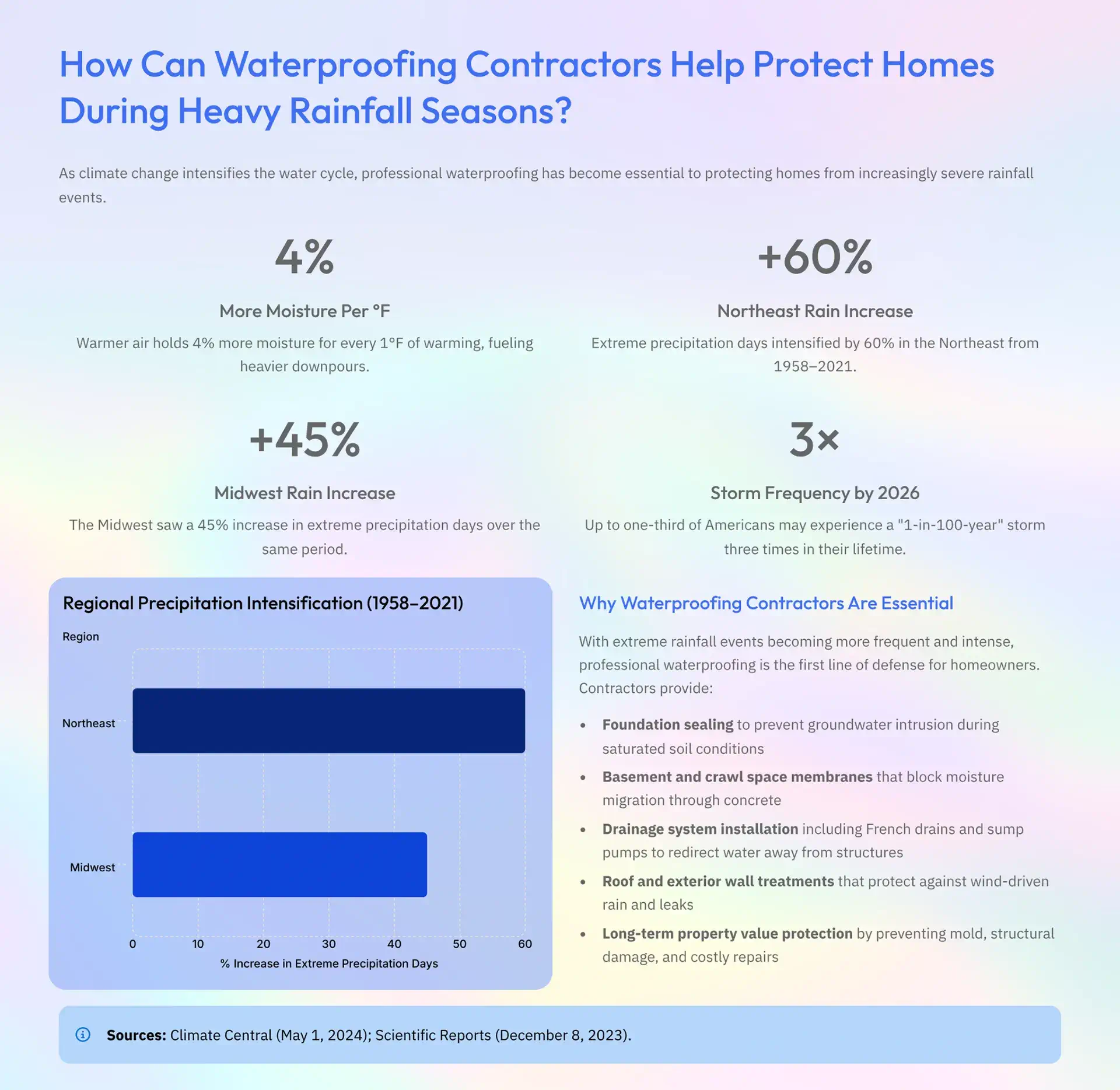
Sources: Climate Central (May 1, 2024), Scientific Reports (December 8, 2023)
FAQs
1. How often should a home be inspected for waterproofing issues?
Most experts recommend a professional inspection at least once a year, especially before the start of a heavy rainfall season.
2. Can waterproofing help prevent foundation cracks?
While waterproofing cannot stop all foundation movement, it can reduce moisture-related pressure that often contributes to crack formation and expansion.
3. Why do basements flood more often during prolonged rain?
Extended rainfall saturates surrounding soil, increasing hydrostatic pressure against basement walls and creating opportunities for water intrusion.
4. Are crawl spaces affected by heavy rainfall even without standing water?
Yes. Increased humidity and moisture accumulation can occur without visible flooding, potentially leading to mold growth and wood deterioration.
5. What is the biggest benefit of preventative waterproofing?
Preventative waterproofing helps reduce the likelihood of costly structural damage, mold issues, and long-term moisture-related deterioration before problems become severe.