
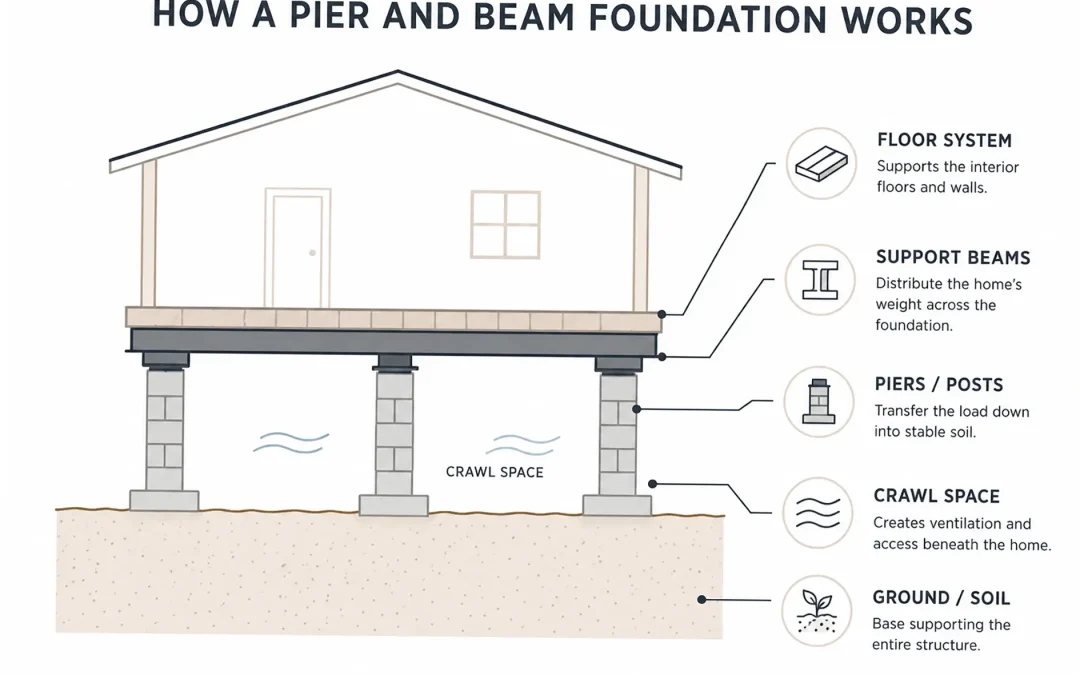
A pier and beam foundation is a raised foundation system that supports a home above the ground using piers and beams. Instead of resting directly on a concrete slab, the house sits on a framework that creates open space underneath the structure.
The piers are placed deep into the ground to support the weight of the home. Beams run across these supports and help carry the structure above. In many homes, this design creates a crawl space that can be used to access plumbing, electrical wiring, and other systems below the floor.
Pier and beam foundations have been used in homes for many years because they offer flexibility and easier access for repairs underneath the property. They are especially common in older homes and in areas where soil movement or drainage can affect foundation stability.
Today, many modern homes use concrete pier and beam foundation systems because concrete provides strong and long-lasting support. Some homes may also use steel or treated wood components depending on the design of the structure.
Compared to slab foundations, pier and beam foundations are usually easier to inspect underneath the home. However, they can also be more vulnerable to moisture problems, wood rot, and settling if drainage around the property is not properly managed.
How a Pier and Beam Foundation Works
A pier and beam foundation works by lifting the home above the ground and spreading the weight of the structure across a system of supports. Each part of the foundation has its own role in keeping the home stable and supported over time.
The Piers
Piers are the vertical supports that transfer the weight of the home into the ground below. They are usually made from concrete, although some older homes may have brick or wood supports.
These piers are placed at key points underneath the structure to help support the beams and floor system above. The depth and spacing of the piers can vary depending on the size of the home, soil conditions, and the overall foundation design.
If the soil shifts or settles unevenly, the piers can move over time. This may lead to uneven floors, wall cracks, or other structural changes inside the home.
The Beams
Beams run horizontally across the piers and help support the weight of the house. Floor joists are attached to these beams, creating the structure that supports the flooring inside the home.
In many pier and beam foundations, the beams are made from wood, steel, or reinforced concrete. The type of material used often depends on the age of the home and the design of the structure.
When beams become damaged by moisture, wood rot, or long-term stress, the floors above may begin to sag or feel uneven.
The Crawl Space
One of the main features of a pier and beam foundation is the crawl space underneath the home. This open area provides access to plumbing lines, electrical wiring, and HVAC components, which can make repairs easier compared to slab foundations.
The crawl space also allows air to circulate under the home. Proper ventilation and moisture control are important because trapped moisture can lead to mold, wood rot, and foundation damage over time.
Keeping the crawl space dry and properly maintained plays a major role in protecting the overall health of a pier and beam foundation.
Concrete Pier and Beam Foundation Explained
A concrete pier and beam foundation uses concrete supports placed in the ground to hold up a home. These piers provide stable points that carry the weight of the structure through beams above them.
This type of foundation is common in modern homes because concrete is strong, durable, and holds up well against moisture and soil movement. It is often used in areas where the ground shifts or drainage can be a concern.
The beams above the piers may be wood, steel, or reinforced concrete depending on the home’s design and local building standards.
Even though concrete foundations are strong, they still need care. Water issues, poor drainage, and soil movement can affect stability over time, so regular inspections and proper drainage are important.
Pier and Beam Foundation vs Slab Foundation
Pier and beam and slab foundations both support a home, but they are built in very different ways. The main difference is that pier and beam foundations raise the home above the ground with a crawl space underneath, while slab foundations are poured directly on the ground as a single concrete base.
Each type has its own advantages depending on soil conditions, budget, and maintenance needs.
Key Differences
| Feature | Pier and Beam Foundation | Slab Foundation |
|---|---|---|
| Structure | Home is raised above ground | Home sits directly on concrete slab |
| Crawl Space | Yes, accessible underneath | No crawl space |
| Utility Access | Easier access to plumbing and wiring | Utilities buried under slab |
| Repairs | Easier to inspect and adjust | Often more difficult and costly |
| Soil Movement | Handles shifting soil better | Can crack with soil movement |
| Cost | Usually higher to build | Usually more affordable |
Which Foundation Type Is Better?
There is no single foundation type that is best for every home. The right choice often depends on:
- soil conditions
- climate
- drainage
- home design
- local building practices
Pier and beam foundations are often preferred in older homes, raised homes, and areas where access underneath the structure is important. Some homeowners also prefer them because repairs to plumbing and utility lines may be easier to reach through the crawl space.
Slab foundations are common in many newer homes because they are faster to build and can perform well in stable soil conditions.
In some properties, a pier and grade beam foundation may be used to provide additional structural support while helping distribute the weight of the home more evenly. These systems are commonly designed for areas where soil movement or load distribution requires extra reinforcement.
Both foundation types can last for many years when they are properly built and maintained.
Common Problems With Pier and Beam Foundations
Pier and beam foundations are strong and long-lasting, but like any structure, they can develop problems over time. Many issues begin slowly and may not seem serious at first. Small changes in the floors, walls, or crawl space can sometimes point to foundation movement or moisture problems underneath the home.
Regular inspections and early repairs can help prevent larger structural damage later on.
Sagging or Uneven Floors
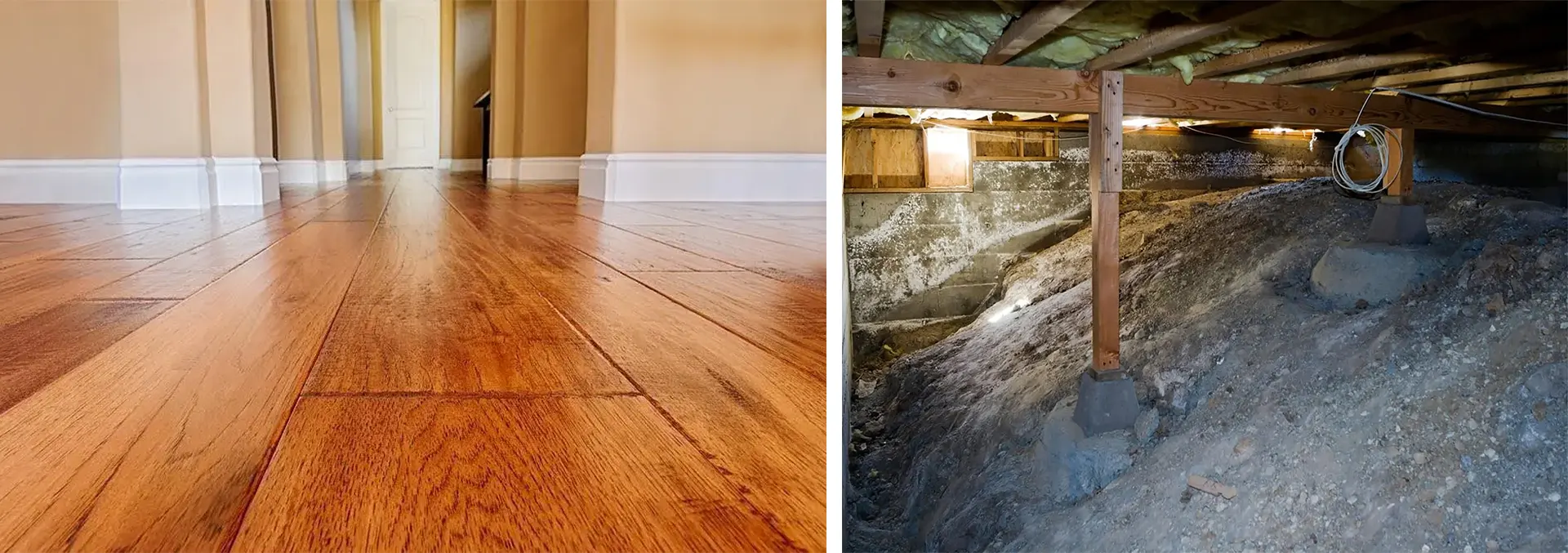
One of the most common problems in pier and beam foundations is uneven flooring. Floors may begin to slope, bounce slightly when walked on, or feel lower in certain areas of the home.
This can happen when:
- support beams weaken
- floor joists shift
- moisture damages wood
- foundation piers settle unevenly
Many homeowners first notice this issue when furniture no longer sits evenly or doors begin rubbing against the frame.
Moisture Under the Home
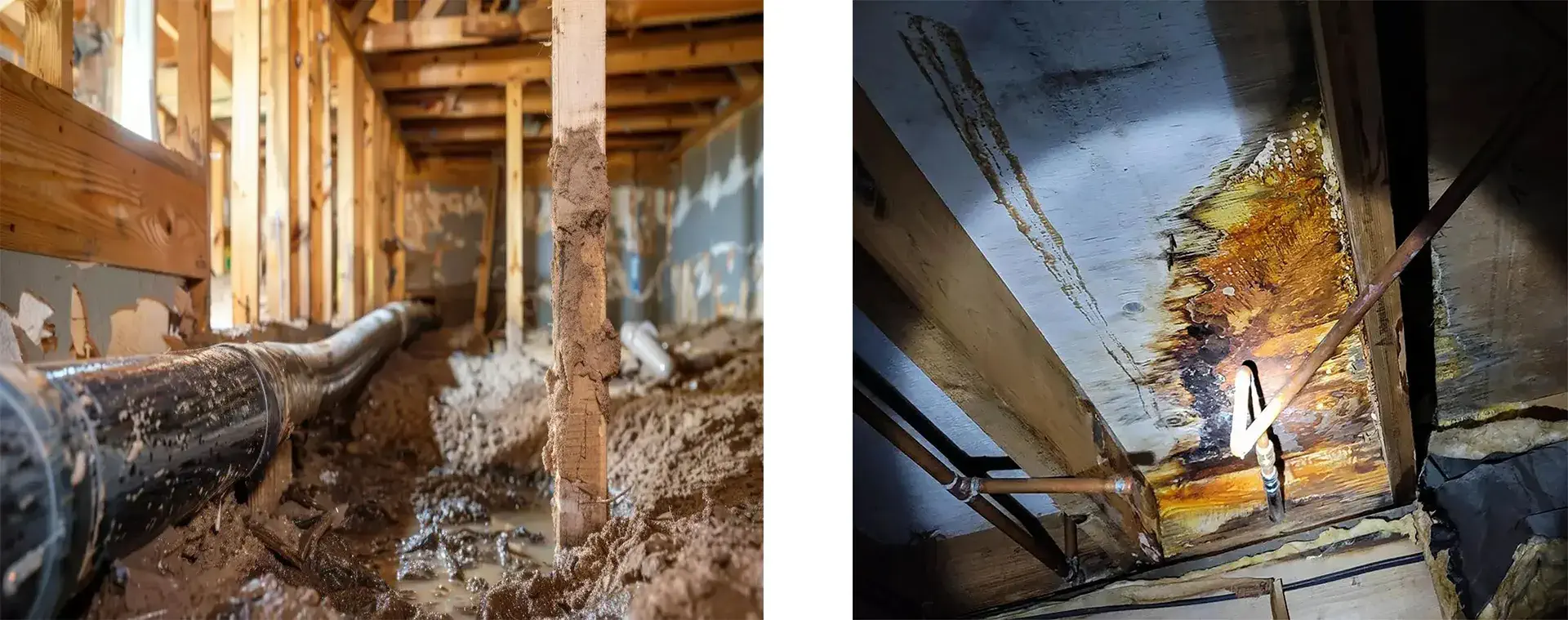
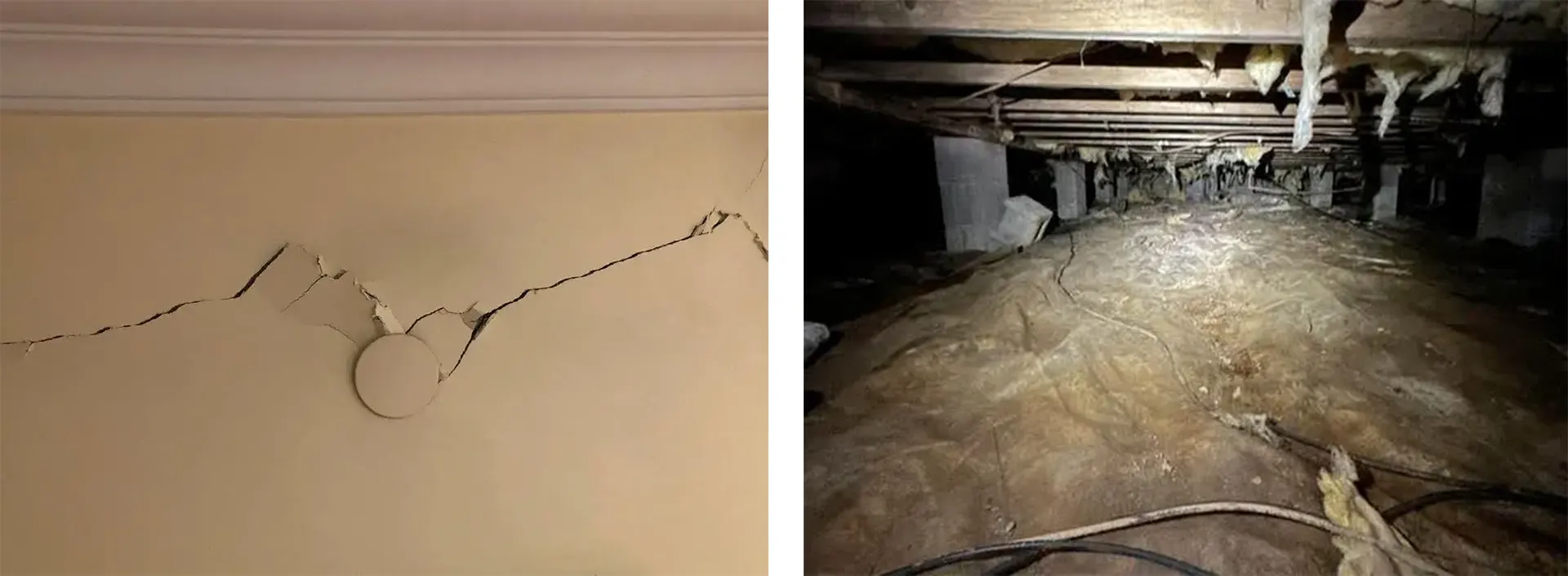
Moisture is one of the biggest concerns for crawl space foundations. Water can enter underneath the home through poor drainage, plumbing leaks, heavy rain, or high humidity.
Over time, excess moisture may lead to:
- mold growth
- musty odors
- damaged insulation
- weakened wood supports
Keeping the crawl space dry is an important part of protecting the foundation and the structure above it.
Wood Rot
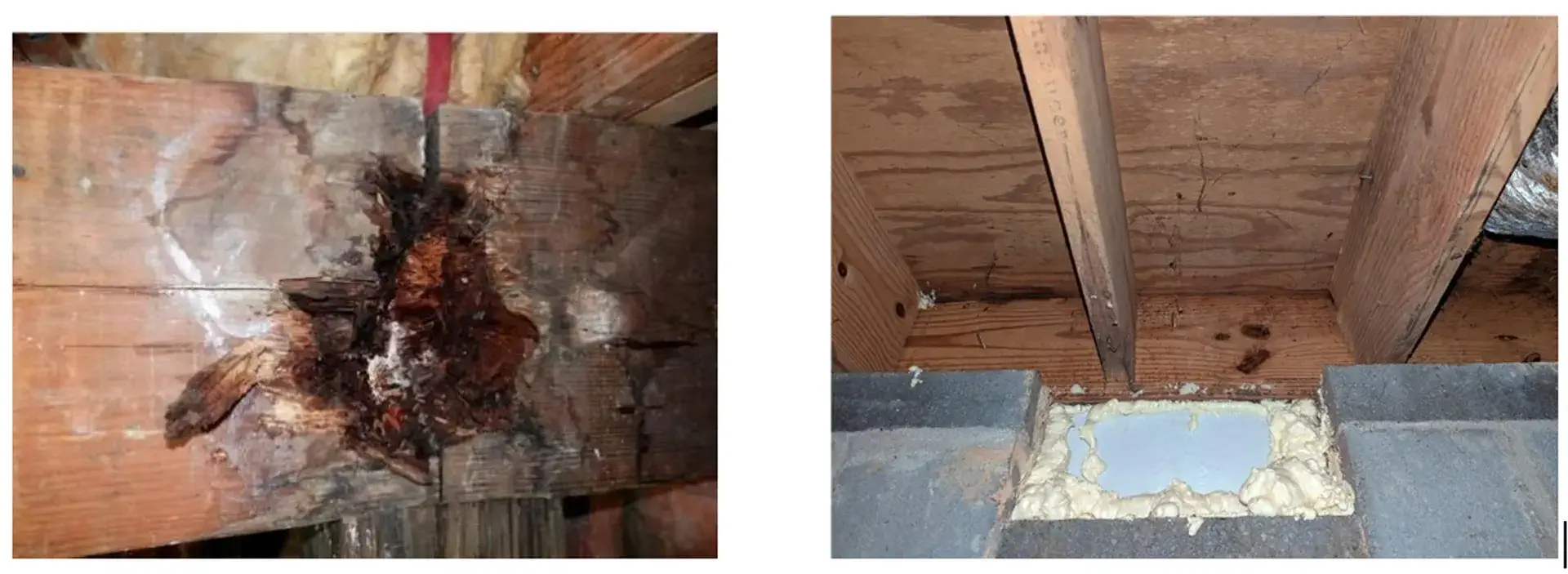
Many pier and beam foundations contain wooden beams and floor supports. When moisture stays trapped underneath the home for long periods, the wood can begin to rot and weaken.
Wood rot may cause:
- soft or damaged support beams
- sagging floors
- structural instability
- pest problems
Older homes are especially vulnerable if the crawl space has poor ventilation or long-term moisture exposure.
Shifting or Settling Piers
Foundation piers can move over time as soil expands, contracts, or settles unevenly beneath the home. Even small amounts of movement can affect the structure above.
Signs of settling may include:
- cracks in walls
- sticking doors
- gaps around windows
- uneven flooring
In some cases, the movement is minor. In others, the home may require leveling or structural repairs to restore support.
Crawl Space Ventilation Problems
Proper airflow underneath the home helps control humidity and moisture levels. When crawl space ventilation is blocked or insufficient, damp air can become trapped under the structure.
Poor ventilation may contribute to:
- condensation
- mold growth
- wood damage
- poor indoor air quality
Keeping crawl space vents clear and managing moisture around the home can help reduce long-term foundation problems.
Signs Your Pier and Beam Foundation May Need Repair
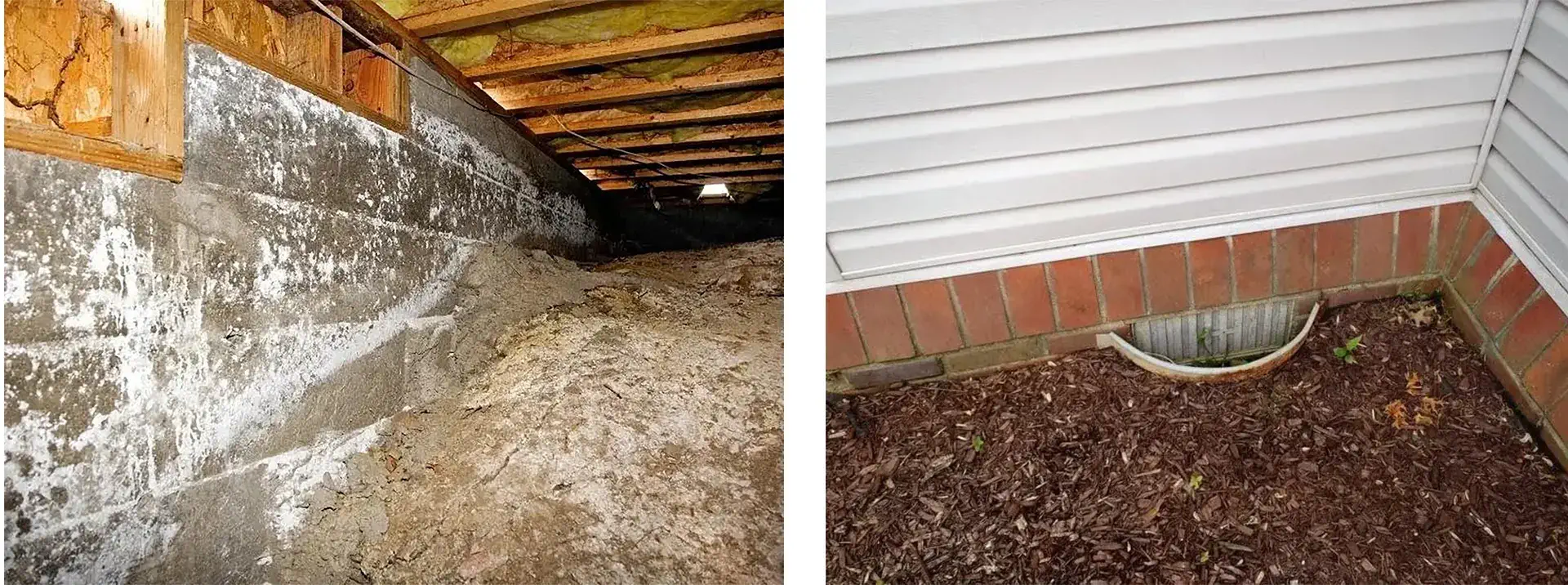
Most pier and beam foundation problems start slowly. At first, the changes may feel small and easy to ignore. But over time, these small signs can point to movement under the home or weakening support in the crawl space.
It helps to pay attention to how your home feels and looks inside, especially floors, doors, and walls.
Common warning signs
- floors that feel uneven or sloped
- doors that start sticking or not closing properly
- cracks forming in interior walls or ceiling corners
- gaps between floors and baseboards
- floors that feel soft or bouncy in certain areas
- a musty smell coming from the floor or crawl space
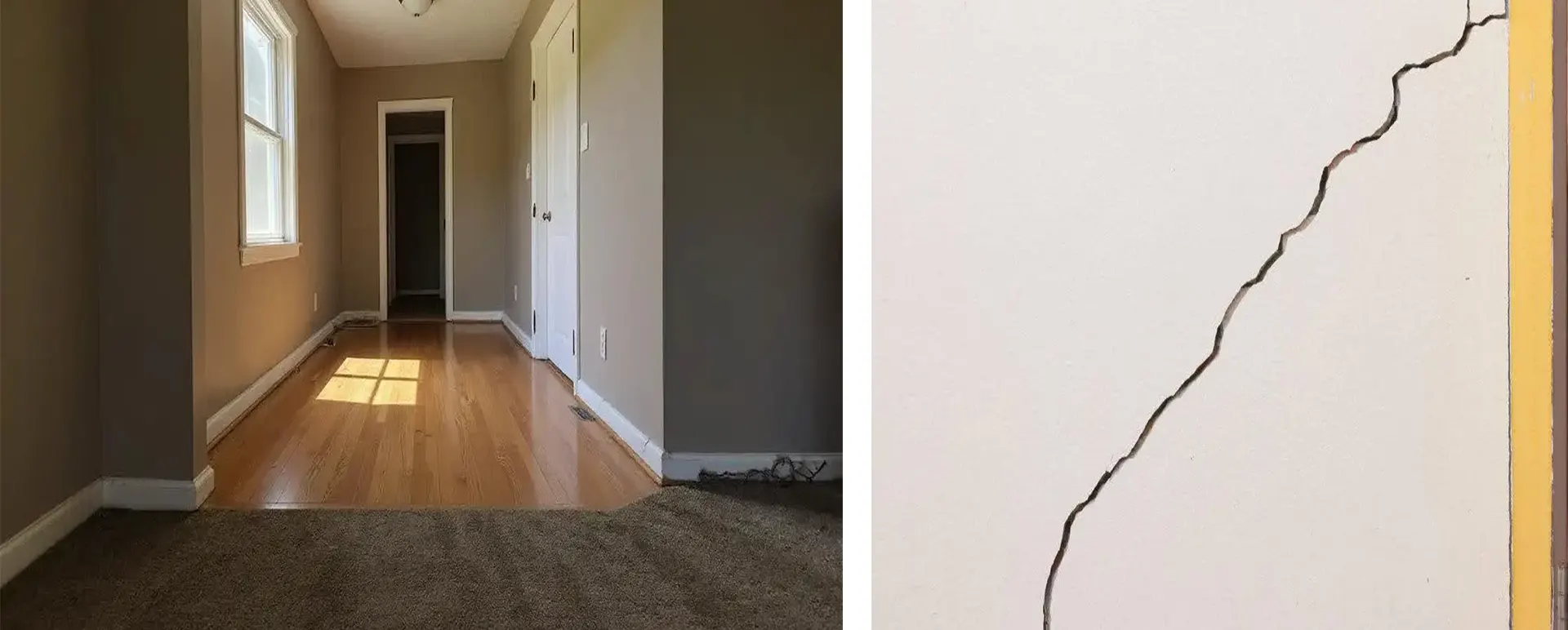
If one sign appears alone, it may not always mean a serious issue. But when several signs show up together, it often means the foundation should be inspected.
When these signs matter more
Some situations make these warning signs more important, such as:
- older homes with crawl spaces
- homes built on soft or shifting soil
- areas with poor drainage or frequent water pooling
- homes that have had plumbing leaks underneath
In these cases, small changes in the home can develop faster.
Can a Pier and Beam Foundation Be Repaired?
In most cases, yes. Pier and beam foundations are often repairable. The type of repair depends on what is causing the problem and how long it has been developing.
Some issues are simple and involve adjusting or replacing support parts. Others may need more structural work to restore proper leveling.
Common repair methods
- replacing damaged or rotted beams
- adding or adjusting piers for better support
- leveling the foundation to correct uneven floors
- repairing or reinforcing floor joists
- fixing moisture problems in the crawl space
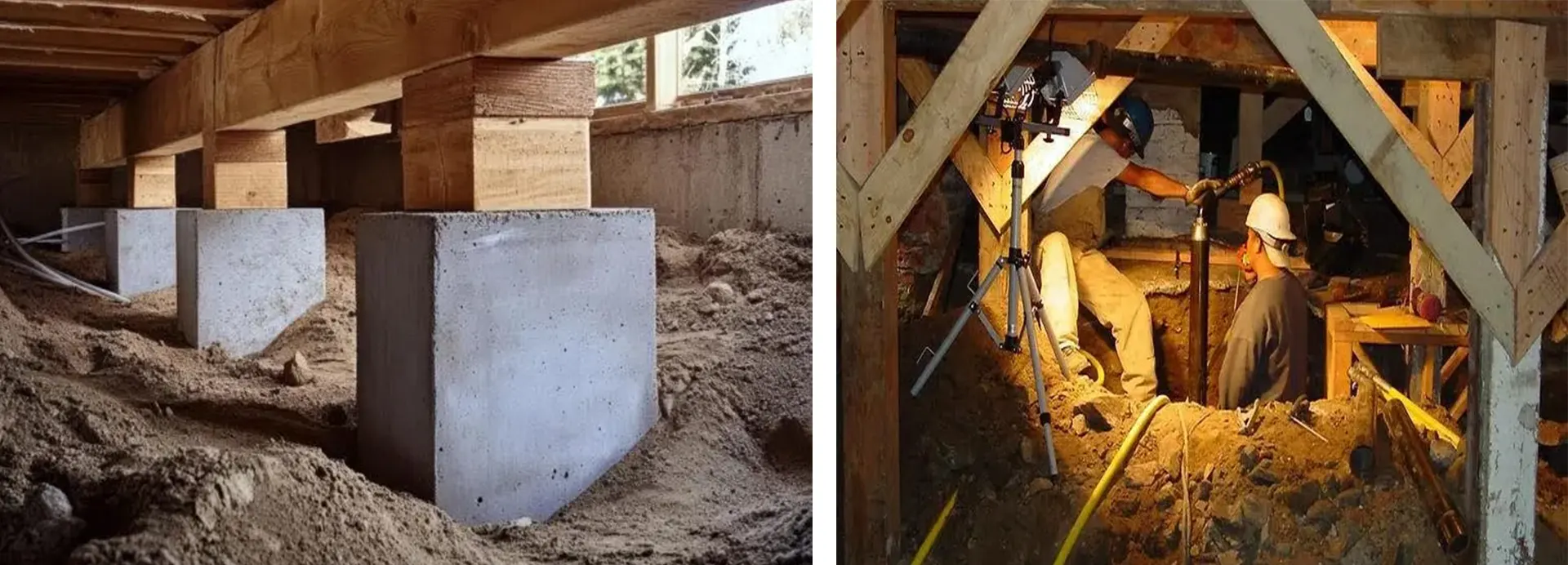
Most repairs focus on restoring balance and support under the home so the structure above becomes stable again.
Why early repair matters
Foundation issues usually become more expensive when they are ignored. Small settling problems can slowly turn into larger structural movement.
Early repair can help:
- prevent floors from worsening
- reduce stress on walls and framing
- avoid more costly beam or pier replacement later
- protect plumbing and utility lines under the home
How Much Does a Pier and Beam Foundation Cost?
The cost of a pier and beam foundation can vary quite a bit depending on the home and the type of work needed. There is no single fixed price because every structure is different.
For new construction, installation costs depend on the size of the home, soil conditions, and design requirements. For existing homes, repair costs depend on how much damage is present and how easy it is to access the crawl space under the house.
Simple adjustments may cost less, while structural repairs such as replacing beams or resetting piers can cost more.
For a more detailed breakdown of repair pricing, you can read our full guide on pier and beam foundation repair cost.
How to Maintain a Pier and Beam Foundation
A pier and beam foundation can last a long time when it is properly maintained. Most problems start with moisture or small changes in the soil under the home, so regular care around the property makes a big difference.
Control Moisture Around the Home
Water should always be directed away from the foundation. Make sure gutters and downspouts are working properly and that rainwater is not collecting near the home.
Keep Crawl Spaces Dry
The crawl space should stay as dry as possible. Standing water, leaks, or high humidity can weaken wood and affect the structure over time. Proper ventilation or moisture control helps protect the foundation.
Watch for Drainage Problems
Poor drainage is one of the most common causes of foundation movement. If you notice puddles forming near your home after rain, it is important to address it early.
Schedule Inspections if You Notice Changes
If floors start to feel uneven or doors begin sticking, it is a good idea to have the foundation checked. Small issues are easier to fix when they are found early.
When to Call a Foundation Repair Contractor
Some foundation changes can wait, but others should be checked by a professional as soon as possible. Knowing when to call for help can prevent small problems from becoming major repairs.
It is a good idea to contact a foundation repair contractor if you notice:
- floors becoming more uneven over time
- visible signs of settling or sinking areas
- moisture problems that keep coming back
- cracks or movement that seem to be getting worse
- structural changes in walls, doors, or windows
In general, if something in your home feels different and the change is continuing, it is worth having it inspected. Early evaluation can help identify the cause before it leads to more serious damage.
Pier and Beam Foundations in New York Homes
Pier and beam foundations are common in many older and raised homes across New York, especially in areas where soil conditions and property age vary from neighborhood to neighborhood.
In places like Brooklyn, Queens, Long Island, and the Bronx, many homes were built with crawl space foundations that allow access to plumbing and structural systems underneath the house. Over time, changes in moisture, soil movement, and drainage can affect how these foundations perform.
Because of this, homeowners in these areas often deal with issues like uneven floors, settling piers, and crawl space moisture. Regular inspection and maintenance are especially important in New York homes due to seasonal weather changes and older construction styles.
Final Thoughts
Pier and beam foundations are common in many homes and can perform well for many years when properly cared for. Like any foundation system, they can develop issues over time, especially when moisture or soil movement is involved.
The good news is that many of these problems can be repaired if they are caught early. Regular maintenance and paying attention to small changes in your home can go a long way in preventing larger structural issues.
If you have noticed changes in your floors or foundation, a professional inspection can help you understand what is happening before the problem gets worse.
FAQs
1. What is a pier and beam foundation?
A pier and beam foundation is a raised foundation where a home sits above the ground on piers and beams, creating a crawl space underneath the house.
2. How long does a pier and beam foundation last?
A pier and beam foundation can last for many decades when it is properly built and maintained. Moisture control and regular inspections help extend its lifespan.
3. What are common problems with pier and beam foundations?
Common issues include uneven floors, wood rot, moisture in the crawl space, and settling or shifting piers over time.
4. How do I know if my pier and beam foundation needs repair?
Signs include sloping floors, sticking doors, cracks in walls, gaps in trim, and areas of the floor that feel soft or uneven.
5. How much does pier and beam foundation repair cost?
Repair costs vary based on damage, materials needed, and accessibility of the crawl space. Small repairs may be affordable, while structural repairs cost more. For full details, see our repair cost guide.
6. Can uneven floors in a pier and beam house be fixed?
Yes, uneven floors can often be corrected through leveling, adjusting piers, or repairing damaged beams and floor supports.
7. What causes a pier and beam foundation to sink or settle?
Common causes include soil movement, poor drainage, water damage, weak support piers, and long-term structural stress.
8. Is a pier and beam foundation better than a slab foundation?
Neither is always better. Pier and beam foundations offer easier access for repairs, while slab foundations are often simpler and lower maintenance in stable soil conditions.
9. How do you maintain a pier and beam foundation?
Keep water away from the home, maintain gutters and drainage, keep the crawl space dry, and schedule inspections if you notice any structural changes.
10. When should I call a foundation repair contractor?
You should call a professional if you notice worsening uneven floors, recurring moisture issues, visible settling, or changes in doors, walls, or windows that continue over time.